Things are heating up

Photo by Sippakorn Yamkasikorn on Pexels.com

I want you to act like your house is on fire, because it is.

Greta Thunberg

When I first saw this young woman leading climate change protest events, I was moved by the many youth activists showing leadership on environmental sustainability from around the world. Once the pandemic began, their movement was transformed and not as vocal or visible. My hope is that youth are able to rally and come back stronger than before. We need their voices and we also need to begin to take action with meaningful impact.

As we move out of isolation and lockdowns into our new “normal”, it has been a harsh lesson to realize that we haven’t dialled down the impact of climate change while we have been spending time at home. Weather events in Western Canada have been serving as a harsh reminder that we have yet to make a dent in addressing our responsibility to be good stewards of our natural environment. As I was writing this blog post, our power went out and it was frightening how quickly the heat moves into a home when there is no way to circulate air.

This unprecedented heat, termed a “dome” has blanketed much of this vast country. As the risk for forest fires becomes dangerously extreme and the heat wave extends, more people are experiencing heat exhaustion, heat stroke and even sudden death. With the climate crisis knocking at our front doors, the need to respond seems more urgent than ever.

Conditions are ripe for a summer of fire and extreme heat while we attempt to resume our normal lives. Looking out for others around us who are vulnerable or living on their own, needs to become a community priority. Indeed, keeping ourselves and those we care about safe during these unbelievable temperatures will take all of our energy and fortitude. Forest fires, drought on our farmlands, flooding and severe weather events have become a stronger aspect of our summer seasons.

We really do need to find ways to collectively take action to effect change in our climate. Before it gets worse. I hope the young people are able to gather together again and mobilize to bring back their activist leadership. It is desperately needed and definitely missed. Let’s hope it is safe for them to do so and follow their lead.

Stay safe, healthy, keep cool, and commit to as many environmentally sustainable actions as you can.
A creative kind of disappointment

Photo by Yaroslav Shuraev on Pexels.com

Disappointment is simply a dream that doesn’t want to become a reality

Richard Wilkin

Have you ever created something only to discover what you had envisioned doesn’t really exist? I spent an hour yesterday morning walking around parks near my home toting my camera. Inspired by some of the intriguing yard art in our neighbourhood, I was beginning to think about creativity as a process. Where it comes from, where it resides, and where it goes when it disappears. Poised with my camera, I shot dandelions in the moment as a sudden burst of wind caused white whispers of seed to scatter into the air. Magnificent, certainly, perhaps even a photograph worthy of posting somewhere.

As I continued to walk, I shot two red winged blackbirds who were either fighting over a nesting spot or defending one that already existed. Clear, sharp in focus, images of birds whose red stripes were vivid showcased in the camera lens. More than satisfied, I continued walking along a creek bank. Pelicans feeding on fish, and performing some morning bathing abulations that I have never witnessed before. They are typically difficult birds to photograph because as soon as they sense your presence they turn their backs towards you. So thinking I had captured at least one shot of these antics got my adrenaline moving.

On the way back, I discovered a piece of yard art that was fun, whimsical and full of hidden surprises. An antique screen door used as the backdrop for an antique hand pump fashioned into a water fountain. Lily of the valley graced the base of the display and in amongst the tiny white flowers were three miniature gnomes in various poses. I didn’t even notice them at first but felt a shimmer of delight in this discovery quickly anticipating how wondrous these hidden glimpses would be in a photo.

Later in the afternoon, I spied a tiny wasp nest attached on the underside of a ladder propped against our backyard fence. It was petite and it took some time to process and register what it was. But before I would remove the nest, I ran to get my camera so I could photograph this tiny little wonder. Popping on a different lens for macro shots, I quickly began snapping pictures from different angles. Paper thin, fragile in shades of grey, white, with swirls of black lines, the subtle texture of the nest quite stunning. A wasp emerged as I was taking a picture which was really neat but I decided there was no point pushing my luck and was grateful I had captured many images.

So last evening I took out my camera card to upload the photos from my creative adventures throughout the day. When I opened the compartment to retrieve my camera card, it was obvious that the card had not been firmly placed in its slot. Feeling a sickening, sinking sensation just below my heart center, I was fairly certain there would be nothing on it.

Ignoring the truth of what was happening, I placed the card in the slot on my computer. Clicking to import new photos, I was confronted with the fact that there really were no images on that card. Absolutely none at all. All of those amazing creative fragments which had danced in my head throughout the day, gone. That swing of energy that carried me through the day had only culminated in a sense of disappointment which lingered for longer than it should have.

Reflecting on this now has made me realize that disappointment should not negate the power of creative bursts of effort. There is much in life that disappoints us and it seems best to release those feelings rather than to cling to emotions that disturb and distort. Creative practice is just that. Practice. In hindsight, the magic of all those moments behind the camera lens continue to inspire. Not to mention learning a rather tough lesson about camera cards!

When we adjust and adapt our expectations, when we summon flexibility as needed, our disappointment disappears!

Stay healthy and safe!

Getting back to “normal” like three legged race

Photo by Anna Shvets on Pexels.com

I think that the general feeling is that the pandemic has passed, that the pandemic is ending, the pandemic is over. That is absolutely not clear.

Dr. J. Froh

“Re-opening plans” “Vaccine Lotteries” “Post Pandemic Guidelines” “Public Health Urges Caution”

Many of our current media headlines contain some facsimile of the above. As global efforts have ramped up to vaccinate many people, communities across the globe are grabbling with what a post pandemic world really means. Individuals are left to interpret real life scientific data as it is being collected and assess their own levels of risk as public health guidelines are loosened. Will there be a fourth wave? Yes. No. Maybe, we don’t know, yet. In limbo or in purgatory? Yikes, how are we supposed to navigate all of this!

It all seems about as confusing as it was in the early days when this pandemic started. The only thing in my experience that I can compare it to is a three legged race. One of those old fashioned picnic games where two people are partnered up and then have one leg tied to each other so in essence they have “three legs”. Then they are expected to race a short distance together to a finish line. Such an antic would be hilarious, people lurching about, falling (gently of course) but it usually took the length of the race to figure out how to work well enough with your partner to begin to run in tandem. This whole re-opening concept strikes me as the same sort of thing.

Restaurants are now open with some restrictions. I must admit I still am not anxious to rush off and dine out. Fitness classes and outdoor recreation activities have resumed. Not quite ready to resume in person yoga but I am tired of doing it over Zoom. Crowds in shopping centres are popping up once again. The first time I noticed how much larger crowds have become I felt unnerved. Early hour shopping opportunities are ending.

Masks are still required in order to enter most indoor businesses and services but the day will soon be coming where they will not be required. In some parts of North America, mask use has created conditions for dangerous occurrences. People have melted down and become physically violent and there have been reports of use of deadly force. All over whether or not someone should wear a mask. Good grief!

What to do if you are vaccinated but wary and anxious about all of this change? What if you haven’t been able yet to get a vaccine? This seems like some kind of reverse deja vu back from when the pandemic began. As case counts come down, I find myself still waiting for the daily news where I get my sense of virus activity in my city, my community, and within groups of people that I know. But I know that I need to start to take risks, begin the process of learning what the new “normal” is and how to step through this next aspect of our lives.

It seems more important than ever to remember to keep things in a balanced perspective. To make your own choices and not condemn others for their chosen level of risk. If someone you know or care about gets the virus, be compassionate! One day it may feel okay but the next day it might not. Learn to accept what is and go with the flow. Be sensible, stay within your own comfort zone. Expect all of this to fluctuate, we are in yet another time of transition. Remember to be okay with what works for you and others in your life whom you care about.

Stay healthy and safe!

Time for Reflection in Canada

Photo L Meyer

3. Reconciliation is a process of healing relationships that requires public truth sharing, apology, and commemoration that acknowledge and redress past harms.

6. All Canadians, as Treaty peoples, share responsibility for establishing and maintaining mutually respectful relationships.

TRC Final Report, Volume 6

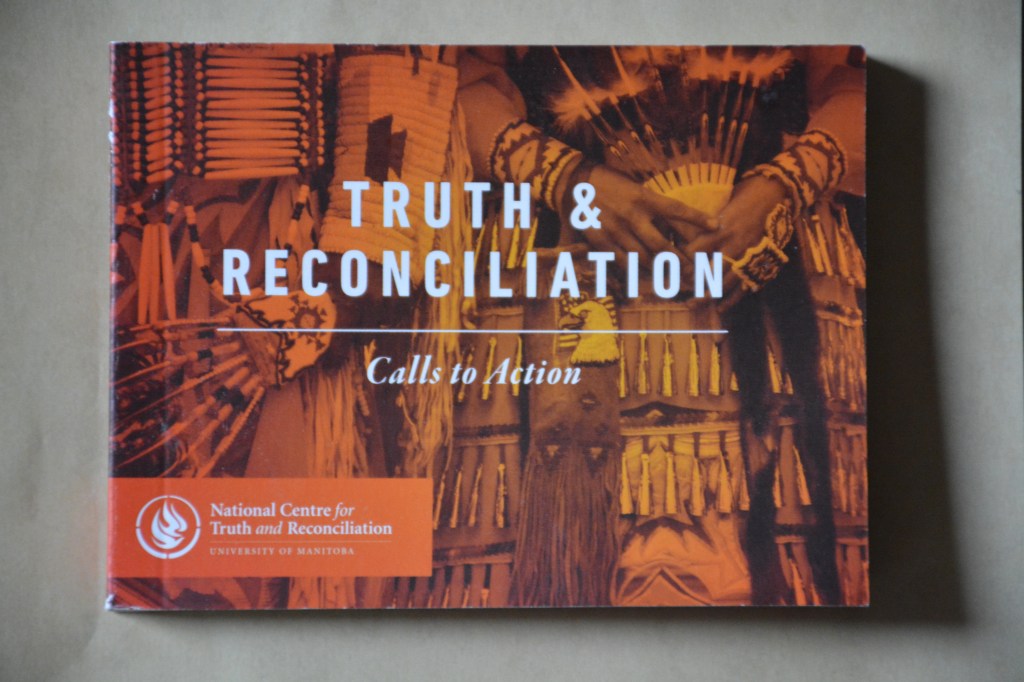
Heartbreaking headlines. The discovery of a mass burial site of 215 children at the former Kamloops Indian Residential School sent shockwaves across Canada last week. People placed tiny shoes on the steps of many provincial legislative buildings, gathered outside of churches to express profound sadness and grief. It seems surreal that so many children were not afforded the respect and decency of ceremonial burial with their family and communities.

And how did they die in the first place? Why were their families allowed to believe they had gone missing? Why were records never kept or shared? So many questions that many indigenous people have been seeking answers to for decades. Their voices ignored, dismissed, discounted up until now so at least they’re being heard.

Since then crisis lines to support residential school survivors and their families have been inundated. Traditional ceremonies held across this land and politicians from all walks have expressed profound sadness coupled with shame. Calls upon the Vatican for the Pope to issue a formal apology on behalf of the Roman Catholic Church, which ran many residential schools, are growing. Louder.

During the hearings held by the Truth and Reconciliation, many survivors shared stories about children who died, went missing, and whose families never learned what had happened to their children. Children who were forcibly taken from them in the first place. It should be unimaginable that these tragedies occurred but we should be asking why there has never been an impetus to investigate what really happened to so many missing children.

This discovery further reveals large segments of our society who complain that this was all in the past and “they” should just get over it. That there are many who never read the Truth and Reconciliation calls to action. How is it possible that all of this work, the pain of survivor’s disclosure, the thoughtful 94 calls to actions have been left to collect dust. Again. This just seems to demonstrate a collective callousness. As Canadians we owe it to the children and to ourselves to reflect and move forward from this in a good way.

My heart hurts thinking about these children taken away from their families causing a pain best left unimagined only to be buried in unknown mass graves. We can do better, we can be better.

Take a moment to help us honour these children through silence, reflection, or prayer.

Paying attention can help grow a writer’s craft

Photo by L Meyer

If you want to change your life, change what you pay attention to. We give things meaning by paying attention to them and so moving your attention from one thing to another can absolutely change your future

Jessica Crispin

For the most part, I haven’t spend a great deal of time considering what types of things I am paying attention to in my day to day life. If I am specifically trying a mindfulness technique or attempting to meditate, I am able to acknowledge the types of thought processes I engage in when I am not doing anything. More typically, I observe what I didn’t pay attention to or have some free floating awareness of the things I am attending to. Especially those negative thoughts or emotions that I may be hanging onto without conscious realization.

But when I am writing, I haven’t spent time thinking about the specifics of where my focus is or isn’t. This week, I embarked on an intensive writing course and part of the work we will be doing is not merely generative writing exercises but learning through a process of paying careful attention to the writings of select authors. And then paying attention to very specific details of my own writing process.

It’s easy to gloss over words, phrases and even entire paragraphs when reading a story and at times the same may be said for when you are writing one. Learning to focus one’s attention to nuance is proving to be a valuable skill. Eye-opening in more ways than one. The first hurdle I had to make was to push through that small mountain of insecurity that one experiences when sharing your writing. This can seem more insurmountable when you are working with a cadre of writers more experienced and who have published more than I have.

But by being asked to pay keen attention to what they are focused upon as readers has brought me new awareness and understanding. Suddenly instead of shying away from constructive criticism, I am craving these gems that fellow writers are sharing. I am coming to value where my story breaks down, or I suddenly inserted a new POV where it shouldn’t be. Hearing what others might do to stimulate character evolution in something I have written, or thinking about where an inciting incident should be placed from different vantage points has served to teach me more than I set out to learn.

However, there was one clear takeaway from this experience that quickly became evident.

If we spend too much time worrying about how others are perceiving what we have created, we will miss an incredible journey of learning about what others have to share with us. These growth opportunities may not come often but when they appear you must seize the moment. Take risks. Seek out helpful criticism. Learn the subtle art of accepting the wisdom of others who have much to teach you about how to pay attention to your own work. And the lessons from this experience have shed light that could likely shine on many aspects of life. Not just writing.

Stay healthy and safe!