The Spark File: a writer’s tool that worked

Photo by Pixabay on Pexels.com

The most interesting part of the experience is the feeling of reading through your own words describing new ideas as they are occurring to you for the first time. In a funny way, it feels like you are brainstorming with past versions of yourself

Stephen Johnson

Have you ever read about a technique that you believe may help you with your creative process or strengthen your understanding of your craft? Many of us do this to further our development in whatever artistic endeavour we are passionate about. If your experience is similar to mine, you may find that you become momentarily excited about an idea but never actually follow through with the practical application of these strategies.

At times, I have wondered if this may be just a sophisticated form of procrastination.

But what happens when you do follow through and commit to trying an idea for a period of time. And then discover that it makes the mark and has real impact.

As a writer, I had been jotting down ideas in random notebooks, my daily journal and sometimes in a notes file on my phone. This has always seemed disjointed and I rarely, if ever have taken much time to review those ideas with more than passing interest. Recently, I came across an article about something called a Spark file. More than casually curious, I then took the time to view a Ted talk by Stephen Johnson, creator of this strategy that he calls the Spark File.

Simplistic in nature, a spark file is simply a chronological record of ideas, thoughts, or creative hunches which excite in some way. Intended for those times when it occurs to you that maybe you should write this down, or research to learn more, or…but never do and those marvellous ideas just float away into some place that must be creative purgatory.

There are likely numerous tools one could use to collect the ideas that in the moment feel important and meaningful but you may not have to time to really sit down and develop them. I chose to use a Google doc because it is easy to use on all of my devices. Working in this way has produced a lengthy document that is really a series of snippets of writing that may be “hunches” or ideas not fully formed but otherwise would be easily forgotten about.

This document contains possible titles for stories I have written, ideas about things to research, edits to consider for pieces already in progress, character sketches, plot devices, questions about point of view, etc. Realistically it serves as a quick snapshot inside my head that tells me a little bit about my writing process, the pieces that I am working on or the dreams I have that I visualize writing about in the future.

The key to making this work is to periodically take the time to review all of what has been entered in your Spark file, take a step back and then begin the search to make associations, find patterns and relationships between the random pieces of writing you have collected over time. I was surprised by the way this actually worked for me. I gleaned enough about my writing process to finish edits on pieces that had stalled and were suspended in limbo.

I suppose the thing I was most surprised by was the manner in which this simplistic tool provided some insight into some aspects of my work as well as the fluid and organic nature of creativity. It seems like more than happenstance that using a loosely structured way to capture some of my thoughts and ideas actually paid off with some results that I am pleased with.

Our creative brains are always available to us and if we can structure a way to capture those ideas that captivate us and contribute in a meaningful way to our creativity, it serves as a roadmap to help prevent getting lost along this journey. And it is always nice when something we read about, and then invest time and effort in, has a real world practical application.

Stay healthy and safe!
“Creating” room in our lives for play

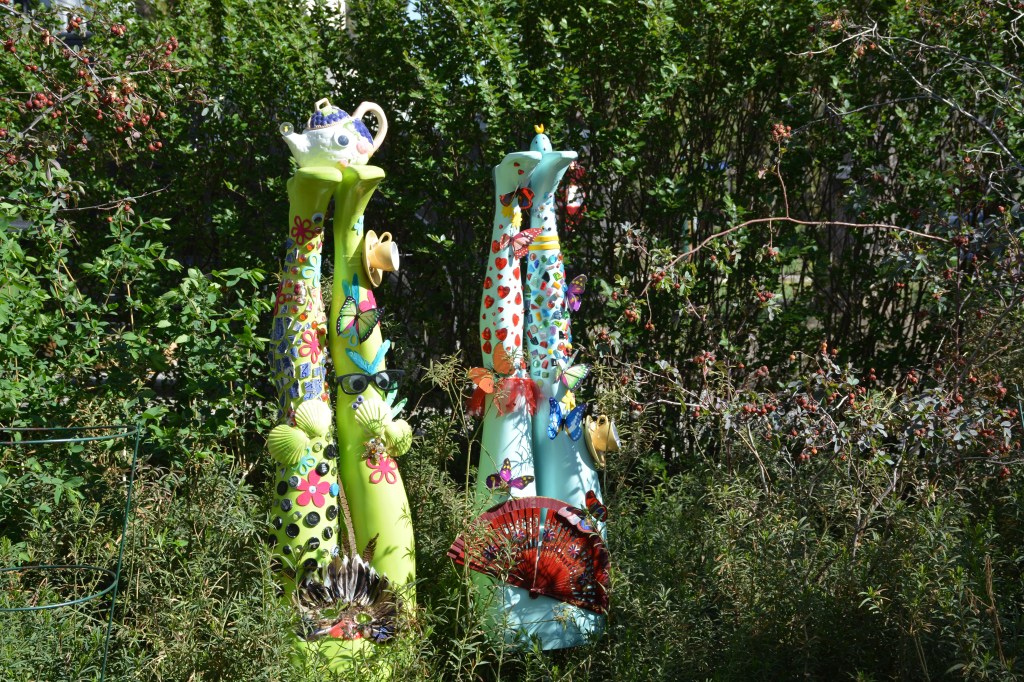
Photo L Meyer

Openness and the ability to access exploratory play are big parts of creativity, but as we get older we become alienated from these abilities. We were all born with this built in imagination. For creativity to work we need to embrace unpredictability. We need to step outside the rules.

David Usher

In this past year our neighbourhood playground has been closed off with yellow warning tape, reopened fully, and now has a barrage of signs with Covid warnings and public health guidelines. Watching small children play with abandon is a fascinating albeit rare event these days. But the manner in which a child creates something, engages in play of any kind is a glimpse into a process that we could all stand to incorporate more often into our own lives.

Spending time observing children in a nearby playground made me keenly aware of how little time adults spend in play. I watched tiny hands piling a mound of sand switching to suddenly run off to gather mounds of sticks then darting back to position them in just a certain way and finally finished with a smooth stone placed on top. To my adult eye this appeared to be a haphazard way of “playing” in the sandbox with the result seeming to be just a pile of messy debris. As quickly as that thought occurred to me, the child decides it is finished and runs off to find her mother to show off her creation. Her exuberance over her creation and excitement to share it with her mother was compelling.

When did we lose our ability to find joy in the most obscure of our creative ventures? If we are makers or creators, we may impose a set of expectations upon ourselves that are not only unrealistic but self-defeating. Do we need to expect that everything we set out to do will find its way into the public domain? Of course not, yet that is precisely what happens for many artists. Our bursts of creative passion are often tempered by rumination, negative self talk that remind us that we are not good enough, creative enough, etc.

The pressure we place upon ourselves before we even sit down to write, or to paint often leaves us in a state of inertia where we erroneously believe it is safer to do nothing than to resist all of this self imposed negativity and persevere. Imagine for a moment if children approached their daily play activities with inappropriate expectations and terror that their sand creation would never be published or purchased. Sounds inane, right? Because it is. And that goes for adults as well.

Instead of defining what we will do with our art before we even create it, what if we just make space in our lives for play, to just create, and become just okay with that. If something emerges that we could send into the world, then perhaps we will do that. But otherwise, it is the process of creativity in and of itself that should be what is of importance. As humans we can be creative in every aspect of our lives. So if we can’t write, or shoot a photograph, or collage or paint a masterpiece, perhaps we are cooking or gardening or bringing pieces of creativity to our work lives.

Relearning to create like a child is a gift that we all deserve to give to ourselves. Although it may seem that taking precious time for exploratory play is frivolous given our daily responsibilities and obligations, we will lose out on those creative leaps that occur when we give ourselves permission to let our imaginative powers loose. Finding those sparks that light us up can be possible when we relax our perfectionistic expectations and learn to lean into the moment. Letting your play flags fly may take us further than we think. And no matter the result, it can’t hurt us to play a bit more often.

Stay healthy and safe!

Be bold…do everything you can to support others right now

Photo by Samson Katt on Pexels.com

I believe we begin every day anew with an empty cup. It’s up to us to fill it with beliefs, thoughts and action that inspire and honour the journey we all share.

Polly Simpkins, The Cup of Karma Project

Countries in various parts of the globe made hard choices a number of months ago to do everything in their power to stop the coronavirus in its tracks and for the most part they have been successful. These choices helped them achieve better outcomes from both a health and an economic perspective. Recently, several countries have done a remarkable job with vaccines leading the way for a path forward for all of us to emulate.

Some countries though are in a constant struggle with how to implement public health measures that will not be met with resistance, protest and outright animosity. The majority of people, albeit, tired of restrictions and isolation follow the rules in order to protect themselves, those they care about and others in their communities. But it has become an uphill battle with people becoming more entrenched in their positions on whether or not they believe vaccines are safe, whether or not masks save lives, and those who claim that Covid 19 is not real continuing to spin their fantastical tales.

Imagine a world where we all agree we are in the same boat together, pulling on oars together in synchronous fashion. Our ship would glide through these turbulent waters as we worked hard not only for ourselves but for one another. Instead at times, we seem to be spinning in opposite directions with some of us pushing, others pulling, with the result being that we are going around and around.

This is a global problem and we need to do more of the good and decent things that we do best and less and less of those that are harmful to ourselves and those around us. Until we decide to put all of our best efforts into ending this pandemic, it won’t end. It will retreat briefly, only to flare up again and again. It is up to each and everyone of us to lead by example and encourage and support others if they are struggling.

Letting go of misdirected anger, animosity, and harmful rhetoric would be a wonderful place to start. Putting faith in our collective efforts, respectfully agreeing to disagree, and thinking about what we could each do that would make an indelible impact upon our future. Working together to resolve the pandemic would give us the encouragement needed to take on the world’s climate crisis and the myriad of other critical issues that require our urgent attention.

Every individual can make a difference. Collectively, we just need to believe that we really want to.

Stay healthy and safe!

Learning to accept the roller coaster of emotions

Photo by L Meyer

Emotions are celebrated and repressed, analyzed and medicated, adored and ignored – but rarely, if ever, are they honoured

Karla McLaren

Being successful in the management of one’s feelings is an ongoing process. Few of us ever reach that vaulted and imaginary finish line, where we have mastered times of inner emotional turbulence. Most of us endure times where we might struggle in managing some of the more difficult emotions that humans experience. It is challenging during these ongoing stressful times to not periodically fall into a dark, dangerous pit of negativity or a false, shrill sense of pseudo optimism often referred to as “toxic positivity”.

Having become more isolated from face to face interpersonal interactions during the “third” wave, it can seem overwhelming to sort out the day to day emotional roller coaster ride that at times seems as if we are hanging on by the tips of our fingers. When we do see people important in our lives, it is all too easy to gloss over or avoid expressing our authentic but unpleasant emotions.

For a period of time, many people were describing the “silver linings” that they were finding during the pandemic. Some of these were profound but many so called silver linings could only be described as inane. But the reality for most of us seems to have become a suspension in time. Where we might be simply languishing. Waiting without an understanding of what might happen next. Finding the future path forward muddied and unclear, along with a plethora of feelings – both negative and positive ones. Some okay and some not so okay.

But they are just feelings. Fleeting moments of emotion that we can learn to manage. The urge we might have when confronted by negative feelings is to outrun them, subdue them, numb them, and this is something that many of us experience but struggle to acknowledge. Fear of pushing others away when we need them the most leads us at times, to downplay those moments when we are experiencing negative feelings.

Humans struggle to listen to one another at the best of times. During the worst of times, this becomes a critical skill to support those we love and care about. Creating opportunities for the expression of emotions regardless of what they are, is a kindness that we could all use more of. Easing the hardship of times where emotional expression is a struggle for someone may be an unexpected gift.

Finding our way forward to accept that emotions are fluid, both positive and negative, and that we all share them as a part of our human experience can only be a good thing. Having a world full of people who will listen to what you need too share, is an even better thing.

Stay healthy and safe!

Subtle signs of spring…and hope

Photographs by L. Meyer

As I sit down to write this post, I can see snowflakes fluttering down from the sky, once again. April has been a challenging month, cold bitter temperatures arrived along with large amounts of snow that didn’t melt for a number of days. Raging active case counts have accompanied the third wave of the coronavirus causing more restrictions, more isolation, and fear. Political theatrics play out around our world as covid deniers, flat earth proponents, and anti-climate change crusaders take up air time.

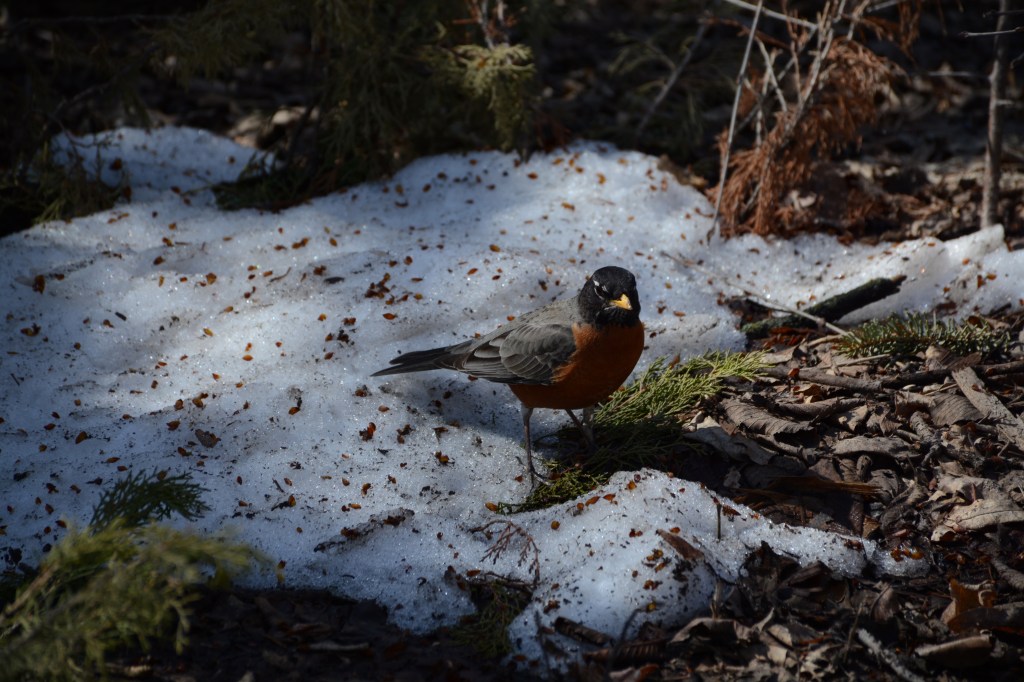
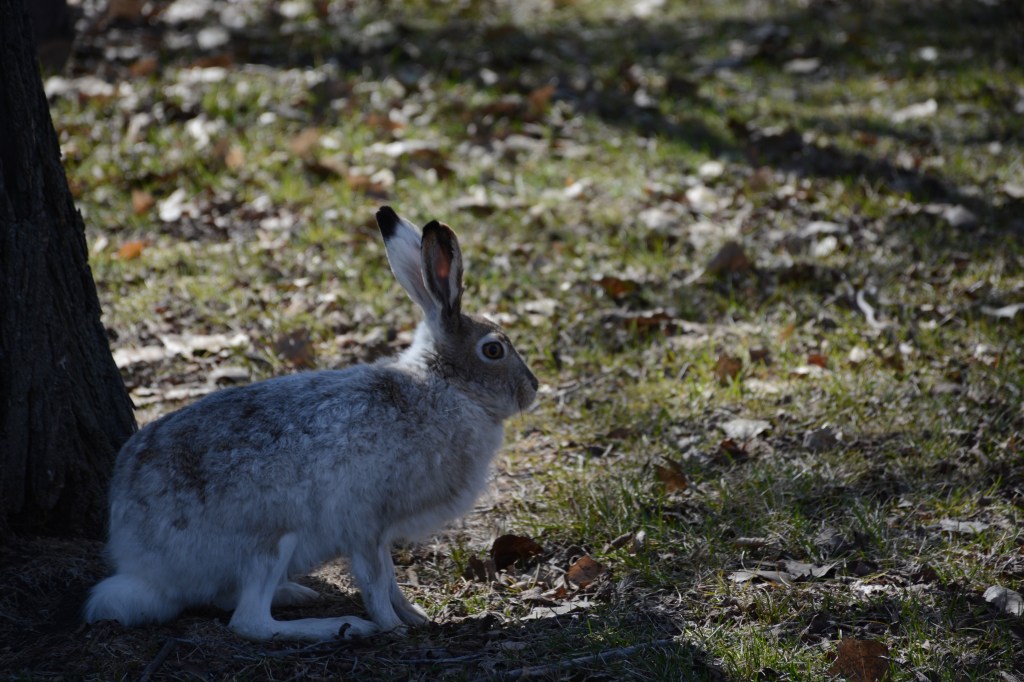
So seeking the hopeful emotions that accompany the changes brought by the spring season seems to have been more elusive this year. Robins arrived on time to a landscape covered in snow and ice. But they remained, unchanged and unharmed in spite of it. Nesting activities continued as per usual. The wild rabbits living in a nearby park changed colour even though their food sources were buried once more and nature’s backdrop was once again painted white. Perennials in my garden seem to have survived the frigid temperatures with no lasting ill effects. Proving they are hardy prairie plants. Which persevere.

An annual journey out to the valley to search out and photograph early spring crocus yielded results similar to years past. Waves of relief accompanied what was actually framed in my viewfinder as I prepared to click the shutter. Although the telltale indications of spring have been slow to come given the disruptions around us, the signs albeit subtle, now gently surround us. Stirring the soul. Providing fresh energy. Giving us hope. Where it is needed.

Stay healthy and safe!

Time distortions

Photo by Pixabay on Pexels.com

Time has become a stand in for all that we cannot control. It is both the breakneck speed at which things are changing, and the burden of how much is staying the same. We are scared this might go on forever

Arielle Pardes

Have you ever stepped back and reflected on your internal perceptions of time during this pandemic? It occurred to me this week following a recent zoom call that our experiences of time fluctuate in ways that they have never before. During recent weeks I feel like I have been on a bizarre see saw where time has been moving too quickly and at others much too slowly. Certainly human emotions are known to distort our perceptions of time and it makes sense given that the virus continues to wreak havoc with many aspects of our lives. Stressors disturb and then time distorts.

Losing track of time is wonderful while we are on vacation or when we become engrossed in a creative project. Losing track of time due to constant distraction and the ongoing struggle to maintain focus is a different story. I have been working recently on revisions and edits of a number of pieces of fiction and realized that I am stopping and starting more than what I would consider typical for my normal work habits.

It is disconcerting (putting this politely) to realize that no matter how much effort I give, that it has been harder to stay focused, be productive and just get things done.

Studies are currently taking place across the globe to examine the ways in which the pandemic has altered our sense of time. Researchers offer that stress impacts perceptions of time as does not having clearly defined timelines and pathways to move forward with our future goals. To try and imagine that this current situation may become our new reality is beyond what most of us can fathom. But we have adapted to things so far and will likely need to continue on this path for the foreseeable future.

Knowing that some of these impacts are from pandemic stressors helps a bit. So is remembering that is okay to struggle with focus and concentration. Owning and acknowledging strong feelings about what is our current context and being okay with that, helps too. Finding a workable schedule and trying to set goals regardless of how small they might be and not self shaming when you don’t meet them may be the best you can do.

Enjoy those moments when your creativity sparks, writing flows and things seem just like they always have. Making sure we nurture our social connections, are mindful of our own self care needs, and taking time for daily movement breaks can help us navigate those tight corners.

Time is really the only thing we have right now and understanding how we may be experiencing it differently might be helpful as we move through these challenging days, weeks, and months ahead.

Stay healthy and safe!

Found Poetry – another window into creativity

Photo by Wallace Chuck on Pexels.com

Found poetry is the literary version of a collage. Poets select a source of text or texts – anything from traditional texts like books, magazines and newspapers to more traditional sources like product packaging, junk mail or court transcripts – then excerpt words and phrases from the text to create a new piece

Found Poetry Review web-site

In an inspired moment driven by one of our ingenious members, our writer’s group celebrated “April is Poetry month” with a playful activity to create found and blackout poetry. Using aging books that eventually would find a resting place in a recycling bin, we cut, glued, and redacted words with a black Sharpie pen and emerged with new creations. Fascinating. Fun. Stimulating. And in the creative spirit of our writers group, affirming our quest to be open to whatever the muse provides.

Intrigued by both the process and the results, I began to search the internet to see what I could learn about found poetry. It is a thing. Has been since the 1760’s when Benjamin Franklin’s neighbour was inspired to create fiction from the news broad prints of the day. Annie Dillard has done it. William Burroughs was quoted about his passion for it. Austin Kleon published a book of poems, “Newspaper Black Out” and performed a Ted Talk about the subject.

From 2011 – 2016, The Found Poetry Review, a literary magazine published hundreds of found poems as well as articles on the craft of found poetry. Teachers around the world use the techniques to share the possibilities of poetry and creative writing with students. And many writers use these and other techniques to springboard writing when stuck. I subscribe to the theory that writer’s need to practice and warm up prior to producing anything worth moving forward.

So this fits perfectly into that tool kit of ideas you may wish to draw upon when stuck, discouraged, or simply want to become primed for words to begin to flow when you sit in front of your computer or pick up your pen and put it to paper. Bonus – it is also perfect for anyone who doesn’t take the time to play enough in their day to day lives. Warning though, you may become so immersed that time flies right by.

Here is the poem that I created from the random page selected for this exercise:

hopelessness covered most of the night

fear would reveal nothing

it quivered, heavy, breathless,

and twitched

in spasm

in light of the morning

hope,

rose like a miracle.

Take some time this month to celebrate the poets in your life!

Stay healthy and safe!

On writing in Coffee shops and other public spaces…

Photo by Adrianna Calvo on Pexels.com

If you can’t sit in a cafe quietly and be ignored, how can you observe human nature and write a story

Evangeline Lilly

Do you miss those random opportunities to overhear conversations in public spaces? To wonder about the people that you are able to observe. I definitely am looking forward to a future where we can once again gather with our family and friends. Where we are able to move about our daily activities without nervousness and fear.

And I really miss those snippets of life where we happen upon conversations between strangers and are able to absorb the body language and nuances of language that are observed and overheard. Oftentimes these translate into dialogue or story ideas. At times, the necessity to write words down would become urgent following these brief human interactions in day to day life.

Character sketches and those tiny seeds that are planted in our imagination somehow become triggered and released when we are in the company of others. Fragments of those worlds inhabited by other people often gain a foothold once we have momentum in our writing process. It is a sub-conscious process that is barely noticed until it is no longer possible.

Last month during a flash fiction workshop, our facilitator read from recently published works. They came into being from these slices of life that were a part of our pre-pandemic world. A brief interaction on public transit, an overheard discussion while waiting for a friend in a cafe, and spending time in public spaces alone but with others. In our current reality, at best my imagination plays a guessing game where I wonder about the facial expression underneath a mask.

Lattes and cappuccinos can be brewed at home but feeling a part of the world and telling the stories that were once all around us lies off in the distance. For now, I am relying on memory of those moments and will relish the time to come in our future when we are able to safely be around others in public spaces. For now I will write words about our human story as they come and take the time to imagine that I am once again alone in a coffee shop.

Stay healthy and safe!

Pandemic puppies and bicycle booms

Photo by Jayden Burdick on Pexels.com

In the face of adversity, we have a choice. We can be bitter, or we can be better. Those words are my North Star

Caryn Sullivan

As the world races to fend off the third wave of the pandemic, it is easy to become overwhelmed by negative news cycles and what seems to be never ending worry and fear. There are some aspects to our current experience that seem to have been positive.

As people in our neighbourhood moved from offices to working from home, it was both fascinating and worrisome to note the number of puppies on our walking paths and park areas. Worrisome in the sense that potentially many animals could end up surrendered to our local humane society when purchased without careful thought and consideration.

Over a year later, these dogs have grown and matured and seem to have become members of families and are now recognizable to me while I am out walking as well. And they all seem well trained and behaved, another side effect of spending all of our time at home instead of somewhere far away while household pets waited anxiously for their owners to return.

Along with new creatures in our community, there is also a noticeable swell in bicycles being ridden by people of all ages. Cars parked along our streets for months without being moved have been likely violating some city bylaw. But it’s wonderful to see people use bicycles or walk to where they need to go and not to rely so much on fossil fuelled sources of transportation. Daily noise of airplane traffic seems to have diminished and one wonders what our future world will bring. A return to old behaviours that have been accelerating climate change or a more mindful path forward?

Gardening, camping, spending more time in the outdoor world. There have been good adaptations along with those that are more challenging. We have learned to continue to connect with family and friends in spite of not being able to see them face to face. Some of us are reading, making things, creating art in any form, and cooking at home, more now than ever before.

While we are likely all hopeful for an end in sight, it is reassuring to know that it has not all been negative and that we have the ability to make changes. Big ones that potentially could chart new directions in our world. We do have the opportunity to become better than we were before.

Stay healthy and safe!

Taking writing risks

And then the day came

when the risk

to remain tight

in a bud

was more painful

than the risk

it took

to blossom

Anais Nin
Photo by samer daboul on Pexels.com

Have you ever sat in front of your computer or at a desk with pen in hand hovering over a notebook? But words won’t come? No matter how badly you wish for them to appear. We all have our unique sets of deeply held beliefs about the writing process. Some of us decide that we are unable to write unless creative impulses motivate us to do so. And the words we hope will somehow instantly appear come forth well formed, sparkling and shiny, delivering just the perfect story or poem or essay.

At times, we create goals that must be achieved. Goals commonly touted to make us become successful writers range from producing according to daily word counts to writing for a specified length of time. Set timers. Free-write first. And failure to achieve these illustrious goals may inadvertently lead us away from the writer’s life into a pit of upset, shame, and frustration.

Sometimes we fall into a belief that we must have a writer’s space, a special dedicated room in order for our craft to evolve. We long for that room of one’s own in true Virginia Woolf fashion, blaming our lack of productivity on not having just the right place where our hoped for success would be defined. If only I have…becomes a rumination that stops us before we start.

And then there is flow. At times, we seek and strive to achieve a state of flow hoping that words will unfurl from our minds in an effortless, almost mystical kind of way. Flow can become a state of writer’s nirvana that we pursue relentlessly but give up and stop the practice of writing when it doesn’t happen for us.

But writing is a practice much like exercise or learning new skills where our expectations need to be firmly grounded in reality and we also need to develop comfort with the notion of taking risks. Risks to fail, risks to write poorly or to be uninspired. The very action of writing will often propel us forward and by resisting this, we can easily become stuck or mired in procrastination.

It does seem to be true that the more you write, the more it seems like you are just limbering up unused muscles. At a certain point, this practice begins to take hold and things routinely start to happen on the page. By balancing our expectations, taking the risks necessary for learning the craft, and simply sitting down to place one words in front of another, small miracles of creation begin to unfold.

No one but you even knows you are taking such risks. Celebrate every risk you take as a writer. Your creative life will appreciate it.

Stay healthy and safe!