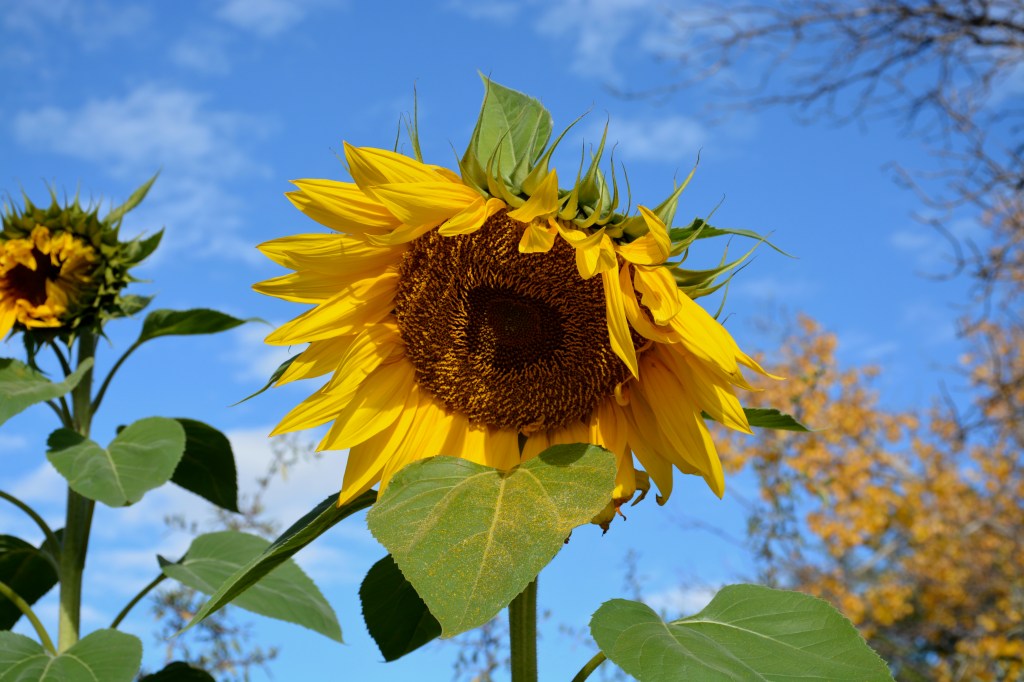
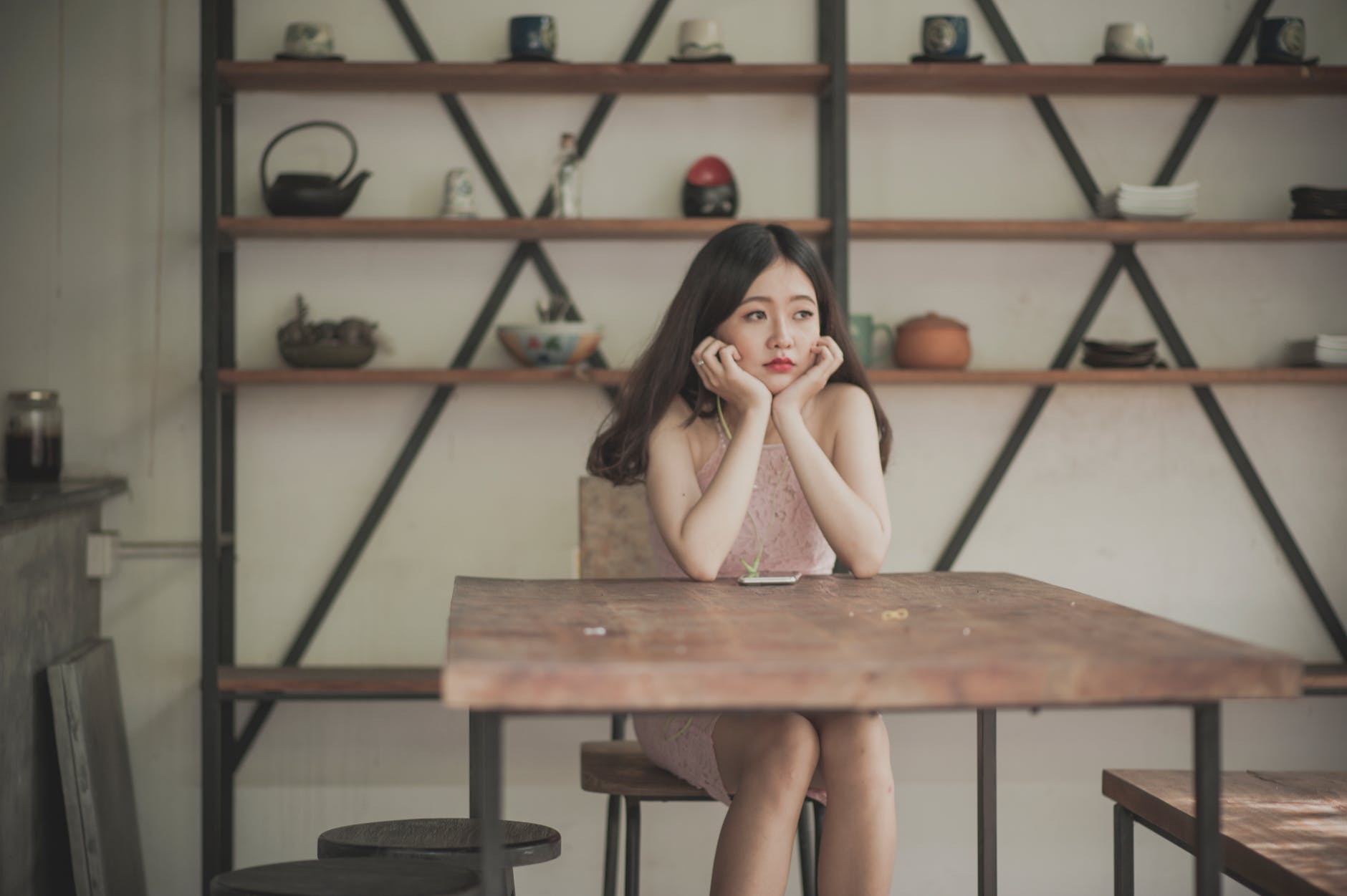
5,6,7,8…who do we appreciate?

Photo by Josh Hild on Pexels.com

Surround yourself with people who add value to your life. Who challenge you to be greater than you were yesterday. Who sprinkle magic into your existence, just like you do to theirs. Life isn’t to be done alone.

Alex Elle

Visits to my dentist are typically low on my list of fun things to do but yesterday I had a bit of an epiphany while I was there. During the past two years, each visit to that office has seemed surreal and somewhat disturbing. Walking into a giant waiting room with only three individuals spaced more than six feet apart, masked, sitting in chairs under signs that declare we will be pre-screened for safety was not just daunting but truly weird. Then a masked health professional would come ask a series of questions, take your temperature, and have you sign a consent that advised your level of risk to develop Covid was higher during dental procedures because of aerosols.

But yesterday all of that had disappeared. The waiting room was full, some people had masks on and some didn’t; the pre-screening event was off the table and an innocuous question about how I was feeling seemed to be the extent of worry about the ever present virus. The dental technician was chatty and full of life and every detail of the visit seemed what I would have expected pre-pandemic.

So it got me reflecting about how I have been living my life during the pandemic, especially for the past six months. And re-examining my understanding of what personal assessment of risk really means. Caring for an ill family member has meant trying to isolate and avoid illness at all costs. But really what are those costs and what is that level of risk?

Research has shown for a number of decades that social connection increases life longevity and as you grow older your risk of death increases even more if you are isolated, see few friends or family members, and spend long periods of time alone.

Prior to the pandemic, I was certainly aware that taking those closest to us for granted is something that is insidious and happens often. Many of us spend our working lives striving for appreciation and recognition. As we age, friendships become more like commodities, time seems to be spend chasing, rushing, working, rather than enjoying those that we love the most.

Having goals and wanting to succeed in life is admirable but at the end of it all what is most important are those closest to us. Friends and family backstop having purpose, focus, and feeling like you matter. The pandemic has highlighted how much value should be placed upon our emotional and social connections. Relying on technology to facilitate interactions with those important in our lives, leaves an understandable void that may introduce negative health consequences that should not be ignored.

Indeed, when thinking about the risks of social interactions in this world we now live in that includes covid, it seems paramount that we also consider the risks of isolation and reduced face to face contact. It seems entirely possible that by trying to avoid a virus we may inadvertently sacrifice the quality of our relationships at the expense of our overall health. That is definitely food for thought!

Stay healthy and safe!
Priming the Creativity Pump

Photo by Alexander Zvir on Pexels.com

Creativity researchers have identified an effective strategy, known as priming, which is a way to jump-start our creative thoughts and feelings.

Trish Osler

Your mind is truly a fascinating space. The relationship between neuroscience and creativity seems both intriguing and worthy of further exploration. Indeed, becoming more mindful of the role that my brain plays in the creation of art could allow me to create distance from that harsh critical voice that chastises me for not writing well or even worse, anything at all.

Often I find myself wondering why it is that some days words flow like a steady stream from my fingertips to the computer keyboard and on others, they remain stalled in mid pose. And why is it that random things like washing the dishes or pulling weeds can precipitate ideas that are startling in their intensity and vibrance.

How is it possible that the mundane aspects of daily living can precipitate the creation of a piece of artwork?

Really, have you ever wondered why some art projects flow like snow melt in the spring and at other times the whole thing just becomes mired in mud.

Fortunately, neuroscientists have a term for this process. Priming. Just like priming a pump, seemingly innocuous events and activities can push your creative stalls into the right place by the introduction of new stimuli. Simple sensory activities like creating an image journal, or listening to music, and mindfulness meditation have been found to function as primers that increase the connections that the brain makes.

And strangely enough, the content and focus of your priming activities do not need to have any relationship to whatever creative problem you might be struggling with. In fact, research has found that allowing your mind to wander afar is more beneficial than intensifying your focus on what you are stuck on.

So being more unfocused allows your mind to do what it needs to do, to wander and play with new ideas, images and sensory snippets in order to move through any blockages to your creative path. If we can stop our tendency to self-shame or blame when we our creative drive veers off course, it seems important to learn which priming activities may help us move forward.

So the next time I feel stuck or unable to write, I am going to try and discover how this aspect of research from the field of neuroscience might “prime” my next creative block and free my brain to move forward in its own unique way.

happy writing!

So why do you write?

Photo by Olya Kobruseva on Pexels.com

Writing is about getting to know more about the world – both the external world around you and the internal world inside you. Don’t let anyone take that away from you.

Robert Lee Brewer

Ever had one of those awkward moments where someone asks you what you have been doing lately and in a moment of excitement you mention that you are writing. Which launches the next question, oh what exactly are you writing? And for many writers who are in mid project, it can be dicey to try and explain succinctly what you are currently working on.

This tough question is often followed by a query about whether or not you are published and if you are, where your work can be found. Small literary journals either online or those still in print, don’t usually lend themselves to brand name recognition. For non-writers at least.

So unless you are discussing aspects of the writing world with a member of your tribe, most well intentioned people politely shift the conversation to something else. Quickly.

Perhaps this type of scenario might cause you to falter for a moment and ponder the question – why am I writing?

Because we all write for different reasons. We might write in order to be published. We might write because we have a need for recognition. We might write to touch the hearts and souls of people. We might be someone who writes for a living. We might write because we have an inner need to express ourselves using this creative vehicle.

But whatever the reason(s) our writing practice is often deeply personal. So to share this path you are on with someone who is not travelling on this journey with you, can leave you in a space where you feel misunderstood or dismissed simply because you know in your heart of hearts that you are a writer.

Writing is about taking risks. It is about having courage to learn to express what resides deep within. It is about having faith in your powers of observation and about being willing to fail when the words don’t line up quite right. Writing is about riding the wave of creative inspiration without knowing where you will end up. It is about a deep and enduring human desire to tell stories.

I am learning as I continue to write stories that this is how I make sense of my life, the world, and the people within it. I recognize that while many of the reasons why I write are fluid over time there is something deeply necessary about expressing myself this way. So for me writing is about growth and discovery and above all else, it is about having hope. Hope that my world will make sense and has meaning.

So why do you write?

Grappling with uncertainty

Photo by Rakicevic Nenad on Pexels.com

If uncertainty is unacceptable to you, it turns into fear. If it is perfectly acceptable, it turns into increased aliveness, alertness, and creativity.

Eckhart Tolle

Uncertainty often manifests itself in our lives as a primary stressor. The longer we experience it, the more challenging it is to learn to embrace it, accept it, or to thrive in spite of it. And the more frequently it pops up in our lives, the more it becomes subject to our innate negativity bias and fills our emotional spaces with worry and anxiety.

The pandemic has fit this bill like a glove. But any situation that is unknown to us especially one that may bring hardship and chaos into our lives quickly shifts into something we wish to avoid. But summoning inner resources and resolve to face tough situations builds muscles of resilience that can help us become stronger over the long term.

So how do you go about finding a way forward and what kinds of tools do you need to develop?

Having a support network of family and friends to backstop you as you navigate the harder things in life has always been a top priority. Learning to use mindfulness techniques to stay in the moment and avoid ruminating about the past or projecting wishful thinking onto the future is often helpful. And at times easier said than done.

But cultivating a state of being curious about what you are facing can help you stay focused on where you need to be.

And curiosity often creates a sensation of playfulness or lightness, helping you stay out of judgment, and clinging to our unhelpful attachments to things. Using statements like “what other ways can I look at this” or “what if” can be useful when you are teetering on the brink and need balance to face what life is bringing your way.

Research shows that curiosity may help build tolerance for anxiety producing situations and encourages unconventional ideas to solve problems.

Being okay with uncertainty, letting things pass, trying to think about how you have both feet on the ground while you walk helps lighten the load when you are facing difficult circumstances. Reminding myself to be curious, to slow down and observe what I am facing, lets me tap into creative responses to life’s challenges.

And right now, I am going to remain curious about whether I can maintain this mindset when I need it most.

stay safe!

Finding your voice

Photo by Thirdman on Pexels.com

A writer’s voice is the way your personality comes through on the page, via everything from word choice and sentence structure to tone and punctuation.

Katherine Schulten

Have you ever wondered how to find your writer’s voice? It doesn’t seem as simple as the voice you bring to the act of singing or speaking. As a beginning writer, there are times when I feel like I am stumbling around trying to find my voice. When I am stuck I find myself worrying about what writer’s voice really is which will send me searching for the answers in craft books or on the internet.

But the reality is, our writing voice lives deep inside of us. The act of creation calls to us to be exactly as we are. Even if we feel like we are trying on shoes that are the wrong size. When we do our creative work, once we allow ourselves to become immersed in it, we often discover that unconsciously we are bringing our writer’s voice to the page.

If we look closely, we can discern the word choices we make, the tone, and our writing style as a reflection of who we are. And over time, this recognition strengthens and becomes intuitive.

When we bring our writer’s voice to the page, we are writing with emotion, passion, and we bring along all of the positive and negative aspects of ourselves. Our dislikes, attitudes, beliefs, wishes and our fears will all show up in what we write. Worrying about what our voice sounds like or is saying will often inadvertently make our words flat, dull, and perhaps unintentionally disingenuous.

Strangely enough, the act of immersion in a piece of creative writing can take us out of our judgemental minds and the less we try to write in a type of “voice” the easier it is to tap into the voice that is your own. Creative work allows us to express what is in our hearts – the pieces we write speak for us in the world. And the more we practice speaking with our authentic voice, it becomes louder and resonates with clarity.

If there was ever a reason to ensure ego doesn’t show up on your page, this would be it. Everything you create with your whole self, with your passionate self, with your true self – is a self-portrait. An unbridled, unfettered word picture of who we really are. And that is the best aspect of the poems and stories we write.

Happy writing!

Writing into spring

Photo by Dawafenjo Gurung on Pexels.com

There is something delicious about writing the first words of a story. You never know quite where they’ll take you.

Beatrix Potter

There is something magical that happens deep within me at the time of spring equinox. My energy levels lift, the piles of snow that remain in my yard no longer matter, and I feel compelled to plant something. Usually only seeds from one type of plant because in this part of the world, it is far too early to anticipate digging in dirt outdoors.

But still, stepping into springtime simply by looking at the calendar and starting a single seedling plants a much needed sense of hope. And so does being able to resurrect a writing routine.

The promise of warmer weather, budding trees, and blooming flowers seems to serve as a springboard for creativity. Ideas flow faster than I can capture them and write them on a page. When I seem to stall, a quick visit to the outdoors where the sun shines brighter and feels warmer, is often enough to shift gears and prompt me to keep on writing.

Earlier worries during the long winter months about not having enough time or inclination to write no longer permeate my days.

Perhaps over time I will learn not to fret about what seem to be the natural ebbs and flows that are part of my writing practice. Circumstances beyond my control put a halt to my progress learning the craft of writing. So faced with ongoing worry about whether I would get back to the page, many days were spent with loops of thought that in hindsight were actually instructive.

It seems that the lesson I needed to pay attention to through this time was learning how to honour the times when words flow easily as well as those times when they don’t.

Creating a first draft always leads to something more. Especially when you have the time and energy to devote to it. In most ways, this seems parallel to the life cycle of growing plants. There are different periods of time where the act of writing unfolds by planting those first words, nourishing, watering and weeding them, and helping them grow until they are ready for harvest.

So I will take the time to honour the new words that are emerging as I move into spring this year and cultivate them just like seeds ready for growth.

Happy writing!!

Age: Can it be a state of mind?

Photo by Anna Shvets on Pexels.com

Everyday experience suggests that we often don’t experience aging the same way, with many people feeling older or younger than they really are.

David Robson

Every so often we have those strange moments in life where our experience in some way defies reality. I bumped up against one such an event last week. During a conversation a friend mentioned that someone I have known for years had retired. But I couldn’t believe this because somehow I was locked in prior decades when my mental reference point was from a time when both this person and I were working.

And ever since I have been struck by the fact that the way I perceive my subjective age is quite different than my chronological age.

And when I checked in with other people around me, they echoed similar experiences. What was most fascinating was that the variability in subjective ages most people have also represents their current state of mind. Not only does it vary from person to person but also from circumstance to circumstance.

This gap between a person’s felt age and what is listed on their birth certificate changes as we grow older. Adolescents and young adults often feel older than their true ages while as we start of accrue more and more birthdays, many of us subjectively feel younger. This discrepancy between felt vs. chronological age has been studied for the past five decades.

The expression “you are only as old as you feel” is true for many. Influenced by our inner mental world and the status of our physical health as well current life stressors, “felt” subjective age can be variable throughout our lives.

The phenomenon of one’s subjective or felt age changes the energy that we bring into our day to day lives. I recognize that when I am excited about certain things or people in my life, or when I am high in a creativity cycle that my youthful self seems to be front and center. Conversely, when juggling too many tasks, when life seems overwhelming, or when we experience tragic events, we can feel older than we ever have before.

And healthy sleep has been identified through research to have a huge impact on our subjective sense of age. That resonates – for those among us who have struggled to have a good nights sleep, we often feel weary and older than our years.

When these times emerge, it often signals a time to take rest, to grieve, to simply slow down and pause until our energy levels are restored. So learning to focus attention to these ebbs and flows that may influence our subjective age, seems a skill worth pursuing.

And hopefully the next time I bump up against the commonplace ageisms that are ubiquitous these days, my subjective inner youthful self can quietly chuckle and simply walk away.

Stay healthy and safe!

“H” is for Hope

Photo credit L. Meyer

Hope is being able to see that there is light despite all of the darkness.

Desmond Tutu

It is difficult to go through a day’s activities without being impacted by horrific images from the devastating reality of the war in Ukraine. No matter where you are in the world, this awareness permeates the lives of most humans today. And it is also hard not to grasp the degree of faith and hope that the people of Ukraine are bringing forth in order to preserve their land, people, and culture.

Hope is not a superfluous concept. Indeed, the lack of it is a significant barrier to positive mental health and at times, life itself. One of the biggest risk factors in suicide is the degree to which an individual experiences hopelessness. Dreams and beliefs are abstract concepts that live in our minds but hope requires doing something.

Hope is a cognitive practice that can be taught to children and adults and is comprised of intentional goal setting and then working towards them with purpose. So when we watch, read or listen to stories from across the globe of those people who are striving to reach their goals in the most difficult, overwhelming and violent circumstances, and could peel back the layers here, we would find hope at the core.

Hope is not wishful thinking but rather it is action oriented and purposeful.

“Optimistic people see the glass as half full but hopeful people ask how they can fill the glass full” – John Parsi, the Hope Center.

So if we are able to take any degree of action to help our fellow humans across the globe, we too, can touch that place that shapes right minded thought and warms human hearts. And instills belief that humans can have hope that peace will prevail and be restored.

Stay healthy and safe!

Sunflower: A symbol of hope for Ukraine

Photo credit – L Meyer

The sunflower possibly surpasses all others in terms of its universal power to bring joy to people.

Kristen M. Stanton

As most of the world watches in horror as Russia invades Ukraine, efforts are ramping up to provide support and solidarity from around the world. Viral videos of a woman trying to hand a Russian soldier a small number of sunflower seeds so they will grow after he has fallen in the dirt, precipitated my desire to better understand the symbolism of Ukraine’s national flower.

Long known as a flower signifying optimism as its head is always turned towards sunlight, the sunflower has a special place for many people around the world. Symbolic meanings also include honesty, longevity, and peace.

Sunflowers serve as a food source for man, birds, and mammals. They are a practical flower as well as spiritual and symbolic.

A botanical plant that has the ability to absorb radioactive isotopes was planted at the sites of what were previous nuclear missile silos in 1996 when Ukraine committed to total nuclear disarmament. Representatives from the United States, Russia and Ukraine were apparently able at that time to plant sunflowers, together, peacefully.

Perhaps now it will also come to signify solidarity with peace loving citizens around the globe to honour the freedom so important in democratic societies. Let’s hope the powers of good around the world prevail and support the Ukrainian people in their time of need. And honour all that the sunflower stands for.

Peace to all.

Boredom: A path to creativity?

Photo by Min An on Pexels.com

Boredom is your imagination calling to you

Sherry Turkle

Bored. That uncomfortable sensation of inertia combined with an undertone of leg jiggling anxiousness. I recognize the sensation but struggle to grasp the words to define it. My inner voice tells me to just shake it off, haunted by a long past memory of my mother’s melodic voice, sort of teasing, sort of chastising, telling me that I have “ants in my pants” and that I just need to go find something to do.

But that seems near impossible during those interminable dragging moments when everything is tainted by the drab beige colour named, “bored”.

Is it this particular point in the long Canadian prairie winter where it is cold beyond belief that induces this sensation? Or life circumstances beyond one’s control that find us slipping into that place of doing things by rote and routine. Whatever the driver to this particularly hellish place, most of us do whatever is necessary to escape it.

While being bored is an uncomfortable emotional state for most of us, it does have a silver lining. Research show that tasks that would meet the criteria as “boring” or “mundane” often cause a cognitive shift from lack of stimulation. This place that most of us either try to avoid or struggle with provides a unique opportunity for our imagination room to play, grow, and expand.

Children who are bored seem more easily able to launch themselves over this hurdle than adults. Most parents have endured that grating whine about being bored only to discover that their children have solved the boredom problem quietly on their own by engaging in some manner with their creative impulses.

Maybe adults lose their play touchstones as they grow older or maybe the sheer number of activities that seem like dreary tasks on a never ending to do list thwart our creative, joyful inclinations. And the more of these tasks we have to complete, the further away we move from that place where play and creativity can be launched.

Some of us are fortunate enough to find solace in daydreams that spur on our creative energies. Others are able to parlay the boredom state to a place where they create art, music, photography or to write. Neil Gaiman said, “You have to let yourself get so bored that your mind has nothing better to do than tell itself a story.”

So the next time you feel bored pay attention to where your mind wanders and see if the state of boredom recedes into the background and creativity emerges to take its place.

Thankfully, studies show that most of us can’t stay in the boredom state for long periods of time. Finding the patience to use those times when we are so bored we can’t stand it may lead us to a place where we are able to find and embrace our creativity that we thought was far away and out of reach.

Stay healthy and safe!