As I sit down to write this post, I can see snowflakes fluttering down from the sky, once again. April has been a challenging month, cold bitter temperatures arrived along with large amounts of snow that didn’t melt for a number of days. Raging active case counts have accompanied the third wave of the coronavirus causing more restrictions, more isolation, and fear. Political theatrics play out around our world as covid deniers, flat earth proponents, and anti-climate change crusaders take up air time.
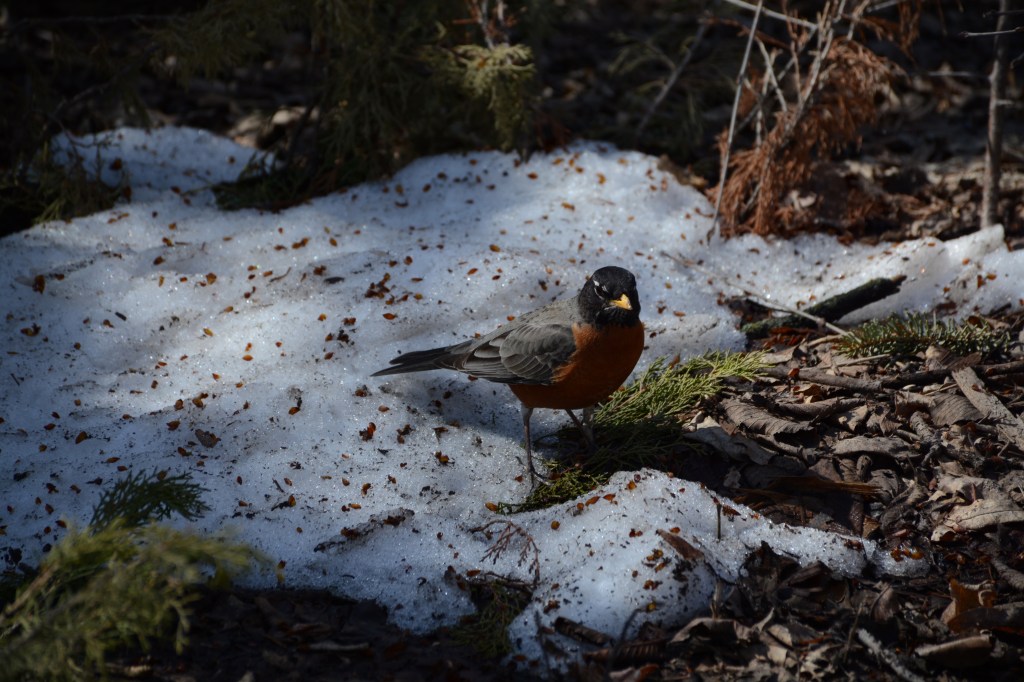
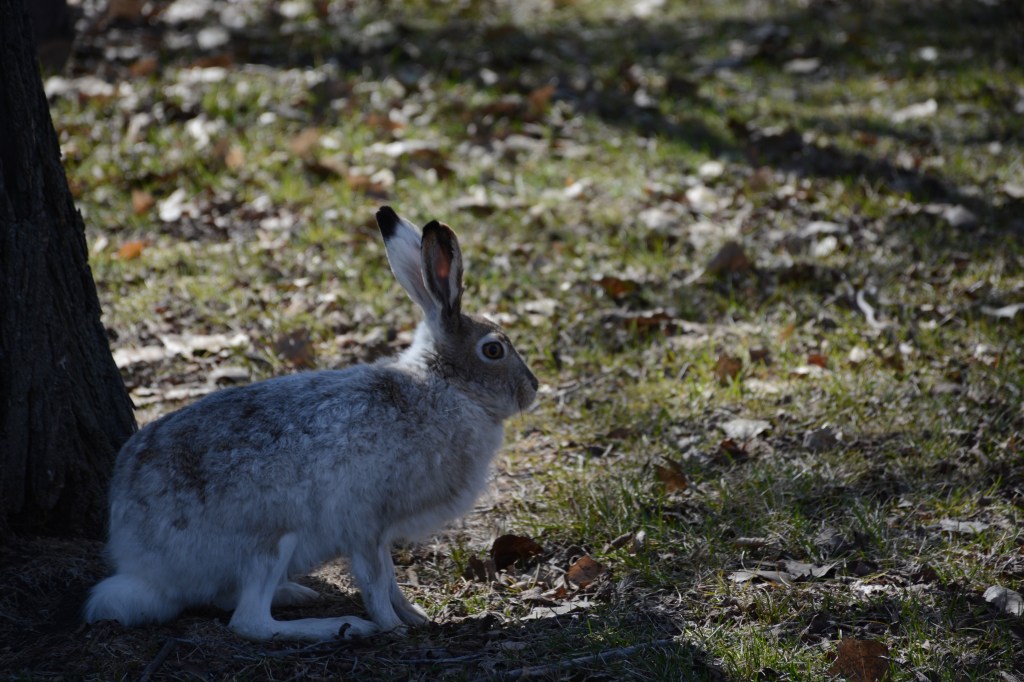
So seeking the hopeful emotions that accompany the changes brought by the spring season seems to have been more elusive this year. Robins arrived on time to a landscape covered in snow and ice. But they remained, unchanged and unharmed in spite of it. Nesting activities continued as per usual. The wild rabbits living in a nearby park changed colour even though their food sources were buried once more and nature’s backdrop was once again painted white. Perennials in my garden seem to have survived the frigid temperatures with no lasting ill effects. Proving they are hardy prairie plants. Which persevere.
An annual journey out to the valley to search out and photograph early spring crocus yielded results similar to years past. Waves of relief accompanied what was actually framed in my viewfinder as I prepared to click the shutter. Although the telltale indications of spring have been slow to come given the disruptions around us, the signs albeit subtle, now gently surround us. Stirring the soul. Providing fresh energy. Giving us hope. Where it is needed.
Time has become a stand in for all that we cannot control. It is both the breakneck speed at which things are changing, and the burden of how much is staying the same. We are scared this might go on forever
Arielle Pardes
Have you ever stepped back and reflected on your internal perceptions of time during this pandemic? It occurred to me this week following a recent zoom call that our experiences of time fluctuate in ways that they have never before. During recent weeks I feel like I have been on a bizarre see saw where time has been moving too quickly and at others much too slowly. Certainly human emotions are known to distort our perceptions of time and it makes sense given that the virus continues to wreak havoc with many aspects of our lives. Stressors disturb and then time distorts.
Losing track of time is wonderful while we are on vacation or when we become engrossed in a creative project. Losing track of time due to constant distraction and the ongoing struggle to maintain focus is a different story. I have been working recently on revisions and edits of a number of pieces of fiction and realized that I am stopping and starting more than what I would consider typical for my normal work habits.
It is disconcerting (putting this politely) to realize that no matter how much effort I give, that it has been harder to stay focused, be productive and just get things done.
Studies are currently taking place across the globe to examine the ways in which the pandemic has altered our sense of time. Researchers offer that stress impacts perceptions of time as does not having clearly defined timelines and pathways to move forward with our future goals. To try and imagine that this current situation may become our new reality is beyond what most of us can fathom. But we have adapted to things so far and will likely need to continue on this path for the foreseeable future.
Knowing that some of these impacts are from pandemic stressors helps a bit. So is remembering that is okay to struggle with focus and concentration. Owning and acknowledging strong feelings about what is our current context and being okay with that, helps too. Finding a workable schedule and trying to set goals regardless of how small they might be and not self shaming when you don’t meet them may be the best you can do.
Enjoy those moments when your creativity sparks, writing flows and things seem just like they always have. Making sure we nurture our social connections, are mindful of our own self care needs, and taking time for daily movement breaks can help us navigate those tight corners.
Time is really the only thing we have right now and understanding how we may be experiencing it differently might be helpful as we move through these challenging days, weeks, and months ahead.
Found poetry is the literary version of a collage. Poets select a source of text or texts – anything from traditional texts like books, magazines and newspapers to more traditional sources like product packaging, junk mail or court transcripts – then excerpt words and phrases from the text to create a new piece
Found Poetry Review web-site
In an inspired moment driven by one of our ingenious members, our writer’s group celebrated “April is Poetry month” with a playful activity to create found and blackout poetry. Using aging books that eventually would find a resting place in a recycling bin, we cut, glued, and redacted words with a black Sharpie pen and emerged with new creations. Fascinating. Fun. Stimulating. And in the creative spirit of our writers group, affirming our quest to be open to whatever the muse provides.
Intrigued by both the process and the results, I began to search the internet to see what I could learn about found poetry. It is a thing. Has been since the 1760’s when Benjamin Franklin’s neighbour was inspired to create fiction from the news broad prints of the day. Annie Dillard has done it. William Burroughs was quoted about his passion for it. Austin Kleon published a book of poems, “Newspaper Black Out” and performed a Ted Talk about the subject.
From 2011 – 2016, The Found Poetry Review, a literary magazine published hundreds of found poems as well as articles on the craft of found poetry. Teachers around the world use the techniques to share the possibilities of poetry and creative writing with students. And many writers use these and other techniques to springboard writing when stuck. I subscribe to the theory that writer’s need to practice and warm up prior to producing anything worth moving forward.
So this fits perfectly into that tool kit of ideas you may wish to draw upon when stuck, discouraged, or simply want to become primed for words to begin to flow when you sit in front of your computer or pick up your pen and put it to paper. Bonus – it is also perfect for anyone who doesn’t take the time to play enough in their day to day lives. Warning though, you may become so immersed that time flies right by.
Here is the poem that I created from the random page selected for this exercise:
hopelessness covered most of the night
fear would reveal nothing
it quivered, heavy, breathless,
and twitched
in spasm
in light of the morning
hope,
rose like a miracle.
Take some time this month to celebrate the poets in your life!
If you can’t sit in a cafe quietly and be ignored, how can you observe human nature and write a story
Evangeline Lilly
Do you miss those random opportunities to overhear conversations in public spaces? To wonder about the people that you are able to observe. I definitely am looking forward to a future where we can once again gather with our family and friends. Where we are able to move about our daily activities without nervousness and fear.
And I really miss those snippets of life where we happen upon conversations between strangers and are able to absorb the body language and nuances of language that are observed and overheard. Oftentimes these translate into dialogue or story ideas. At times, the necessity to write words down would become urgent following these brief human interactions in day to day life.
Character sketches and those tiny seeds that are planted in our imagination somehow become triggered and released when we are in the company of others. Fragments of those worlds inhabited by other people often gain a foothold once we have momentum in our writing process. It is a sub-conscious process that is barely noticed until it is no longer possible.
Last month during a flash fiction workshop, our facilitator read from recently published works. They came into being from these slices of life that were a part of our pre-pandemic world. A brief interaction on public transit, an overheard discussion while waiting for a friend in a cafe, and spending time in public spaces alone but with others. In our current reality, at best my imagination plays a guessing game where I wonder about the facial expression underneath a mask.
Lattes and cappuccinos can be brewed at home but feeling a part of the world and telling the stories that were once all around us lies off in the distance. For now, I am relying on memory of those moments and will relish the time to come in our future when we are able to safely be around others in public spaces. For now I will write words about our human story as they come and take the time to imagine that I am once again alone in a coffee shop.
In the face of adversity, we have a choice. We can be bitter, or we can be better. Those words are my North Star
Caryn Sullivan
As the world races to fend off the third wave of the pandemic, it is easy to become overwhelmed by negative news cycles and what seems to be never ending worry and fear. There are some aspects to our current experience that seem to have been positive.
As people in our neighbourhood moved from offices to working from home, it was both fascinating and worrisome to note the number of puppies on our walking paths and park areas. Worrisome in the sense that potentially many animals could end up surrendered to our local humane society when purchased without careful thought and consideration.
Over a year later, these dogs have grown and matured and seem to have become members of families and are now recognizable to me while I am out walking as well. And they all seem well trained and behaved, another side effect of spending all of our time at home instead of somewhere far away while household pets waited anxiously for their owners to return.
Along with new creatures in our community, there is also a noticeable swell in bicycles being ridden by people of all ages. Cars parked along our streets for months without being moved have been likely violating some city bylaw. But it’s wonderful to see people use bicycles or walk to where they need to go and not to rely so much on fossil fuelled sources of transportation. Daily noise of airplane traffic seems to have diminished and one wonders what our future world will bring. A return to old behaviours that have been accelerating climate change or a more mindful path forward?
Gardening, camping, spending more time in the outdoor world. There have been good adaptations along with those that are more challenging. We have learned to continue to connect with family and friends in spite of not being able to see them face to face. Some of us are reading, making things, creating art in any form, and cooking at home, more now than ever before.
While we are likely all hopeful for an end in sight, it is reassuring to know that it has not all been negative and that we have the ability to make changes. Big ones that potentially could chart new directions in our world. We do have the opportunity to become better than we were before.
Have you ever sat in front of your computer or at a desk with pen in hand hovering over a notebook? But words won’t come? No matter how badly you wish for them to appear. We all have our unique sets of deeply held beliefs about the writing process. Some of us decide that we are unable to write unless creative impulses motivate us to do so. And the words we hope will somehow instantly appear come forth well formed, sparkling and shiny, delivering just the perfect story or poem or essay.
At times, we create goals that must be achieved. Goals commonly touted to make us become successful writers range from producing according to daily word counts to writing for a specified length of time. Set timers. Free-write first. And failure to achieve these illustrious goals may inadvertently lead us away from the writer’s life into a pit of upset, shame, and frustration.
Sometimes we fall into a belief that we must have a writer’s space, a special dedicated room in order for our craft to evolve. We long for that room of one’s own in true Virginia Woolf fashion, blaming our lack of productivity on not having just the right place where our hoped for success would be defined. If only I have…becomes a rumination that stops us before we start.
And then there is flow. At times, we seek and strive to achieve a state of flow hoping that words will unfurl from our minds in an effortless, almost mystical kind of way. Flow can become a state of writer’s nirvana that we pursue relentlessly but give up and stop the practice of writing when it doesn’t happen for us.
But writing is a practice much like exercise or learning new skills where our expectations need to be firmly grounded in reality and we also need to develop comfort with the notion of taking risks. Risks to fail, risks to write poorly or to be uninspired. The very action of writing will often propel us forward and by resisting this, we can easily become stuck or mired in procrastination.
It does seem to be true that the more you write, the more it seems like you are just limbering up unused muscles. At a certain point, this practice begins to take hold and things routinely start to happen on the page. By balancing our expectations, taking the risks necessary for learning the craft, and simply sitting down to place one words in front of another, small miracles of creation begin to unfold.
No one but you even knows you are taking such risks. Celebrate every risk you take as a writer. Your creative life will appreciate it.
Vaccinations are being rolled out in our community according to criteria such as age, health care professionals, etc., and based on supply. A special opportunity arose in our city, which has had a concerning spike in variants in the past two weeks, for people in my age category to receive the first dose of a Covid – 19 vaccine at a drive through clinic. Not something that I have ever experienced before but I jumped at this as soon as I heard it being announced.
So I arrived early this morning just as the clinic was set to open and found myself driving towards long lines of cars. Typically this parking area, dull asphalt grey, is used for professional sporting events, exhibitions and a giant agricultural show. Now it has been transformed into a health care staging area! By the time I had parked, and scoped out my surroundings, I quickly realized two things. First, there were so many cars that I couldn’t actually understand how the queue was to work and second, as people parked both beside and behind me, I would not be leaving any time soon. So, with no chance to change my mind, I settled in for the journey.
A kind young woman came to my car and asked to place a card on my windshield so that they could use my arrival time to assess what the actual wait time was to receive a vaccination. Sure, I said, and what exactly is your best guess at the wait time. Five hours she said, then quickly pointed out the portable washroom facilities and wished me a great day! As I looked around me, I saw one of my new neighbours reading a book titled, The Power of Habit” and the woman in front of me opened her trunk revealing a cooler and a lawn chair.
Most people seemed to be using their cell phones and for the first hour, it was relatively quiet in our area of the gigantic parking lot. After about an hour, I was feeling stiff and somewhat uncomfortable so got out of my car to stretch and to determine how the lines would work. There didn’t seem to be any traffic moving towards the buildings that I assumed we would be driving into. I could also see that people were becoming a bit restless and some headed off to use the facilities. It occurred to me at this point that there might be long lines for those as well.
So I decided not to drink very much liquid and to wait as long as possible. I set off for a long walk and marvelled at the number of vehicles that kept coming and watched as new lines continued to form well beyond where I was. Walking back to my car, I began to gather a sense of how the traffic would flow once lines began to move. People were now mostly outside of their cars, the gentlemen beside me having abandoned his reading material and now had begun cleaning his headlights. Several people climbed into their truck beds to video the scene and to survey what was going on.
I spoke with a woman who commented that she was most grateful for this opportunity and I heartily agreed. Hard to be cranky about waiting when you were about to receive something that potentially could be life saving. The weather is fully cooperative, with soul warming sunshine and little wind. I try and read a bit and write some words but am finding myself too distracted by everything going on around me. Finally, the line beside me roars to life with cars starting and I realize we are soon to be next.
The journey continues. Albeit it is slow and meandering and I still can’t visualize where we will end up. Another hour of slow, steady driving towards a certain destination that must be within eyesight but the line of cars snakes around corners. Eventually, the building we will enter is suddenly before us and it is clear where the line finally ends. Once inside, cheerful, proficient professional nurses are administering vaccines and once completed, we are directed outside to a parked area manned by Emergency medical services personnel for the final 15 minute wait.
Five long hours seemed insignificant compared to the challenges of this entire past year. So glad, and so grateful to have had this opportunity. I will celebrate as our community continues to receive the chance to be safer and to stay healthy. Let’s hope that the next several months bring about the changes we have all been waiting for.
If you want others to be happy, practice compassion.
If you want to be happy, practice compassion
Dalai Llama
As we approach the one year anniversary since the pandemic began, the voices in our community have become louder and at times, difficult to listen to. We have all had to face our internal reactions to the impact that this virus has had on our lives. And as a general guideline, reactivity tends to come from a place of fear or a need to exert control over some aspect of our lives.
Across the globe, we are seeking hope and imagine positive outcomes with new vaccines. And at the same time we seem to be exposed to constant anger and frustration lurking at every turn about a myriad of issues. It seems that many places around the globe are coming to grips with the realization that public health guidelines will need to remain in place for some time to come. Loosening restrictions won’t occur overnight and will likely be scaled back at a snail’s pace.
We watch, we listen, and we interpret information that is constantly shifting and changing. It seems at times that the learning curve about this virus and what we need to do about it, continues to become steeper and steeper.
All the while, we need to recognize that every person has their own way of managing through this experience. If we find ourselves constantly judging the actions and behaviours of others, we are likely not paying that much attention to what we are doing. Whether we realize it or not, we are all in this together and healing comes from a place of reflection and compassion.
Many of us may be concerned about the financial, emotional, and social costs to this pandemic, but there is one critical option available to each of us. And there is no cost to it whatsoever.
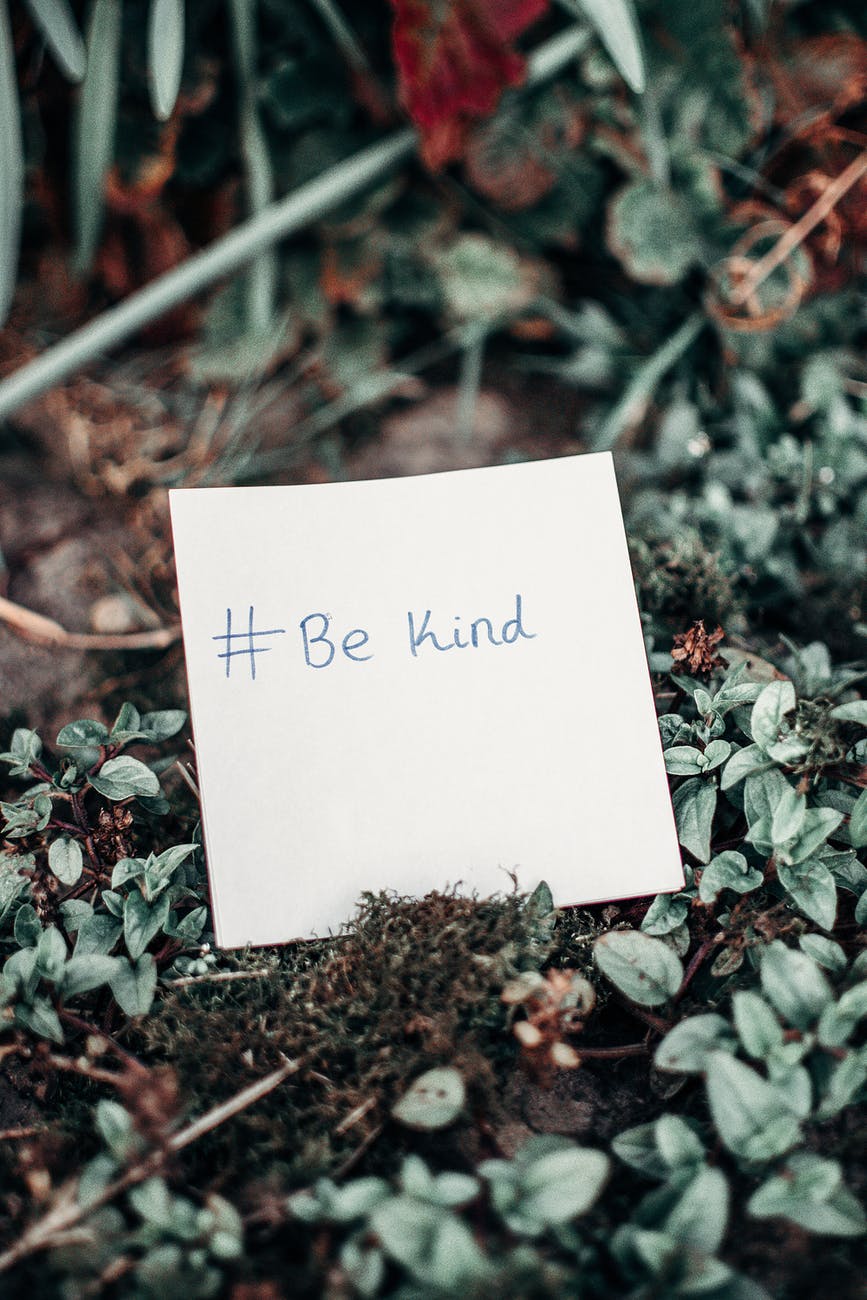
And that is to internalize and practice kindness. Kindness, both in thought and actions towards others as well as to ourselves, is free and comes without strings attached. Instead, when we come to the people, events and circumstances in our lives from a place of kindness, it generates positive actions which allow us to move forward in good ways.
And wouldn’t it be much easier to navigate through this next year if there was more kindness circulating in our world. Be kind to yourself. And be kind to others.
Procrastination. That’s what led to my discovery of a fascinating citizen science program close to home. I was stumped by a writing project that up until that day had been progressing nicely. Suddenly words which normally flow, first became fleeting, and then seemed to have simply vanish. Vaporized. So I tried going for a walk. That normally helps. But nothing. In desperation, I sat in front of the television and mindlessly perused the listings when a program about the polar bears in the Canadian arctic appeared.
Intrigued, I soon learned that February 27 marked International Polar Bear Day and our national broadcasting corporation was debuting a new program about the impact of climate change in the Arctic on Canadian Polar Bear populations. Scientists have been signaling concerns about climate change and its impact on the wildlife in the arctic for years. The species that has become the most vulnerable to the devastation of climate change are the polar bears. The area surrounding the town of Churchill, Manitoba located on the Hudson’s Bay is home to one of the largest populations of Canadian Polar Bears.
Changes to Arctic sea ice as the climate on earth becomes warmer, have created dire challenges for the polar bears as they are now forced to wait for longer periods of time to get out on the sea ice to hunt seals which are their primary source of food. Typically, female bears hunt and store enough food to see them through the annual birthing process that may mean they go six months without food or water. Changes to the sea ice mean they now may be fasting as long as eight months.
It also places the humans living close by at risk as the bears venture into the town of Churchill when they seek out the sustenance they badly need and are attracted by the variety of urban smells that signal food is available. Conservation projects have been created to prevent the destruction of these majestic creatures using methods to contain and then release the bears back into the wild. Scientists researching the impact of warmer water and less sea ice are working to collect data to inform the current understanding on the impacts of climate change.
Writer’s curiosity kicks in and I begin a stumbling search on the internet to learn more about conservation in the Far North and search engine magic leads me to The Arctic Bears Project. Citizen scientists are being recruited to assist with data analysis to help answer several research questions through a web-site called Zooniverse.org Researchers from the University of Saskatchewan are seeking volunteers to help analyze data from trail cam photographs about polar bears and other Arctic animals from the Hudson Bay area.
What an amazing opportunity to not only make volunteer contributions to this research but to learn more about parts of our natural world that we will likely never visit. Who knew that having a minor bout of writer’s block would lead down such an interesting path? Check it out – there are projects from around the world on this site that need volunteer citizen scientists. I am thankful this fascinating detour was all that I needed to jumpstart my writing process. And a necessary reminder about the impacts of climate change on the natural world that surrounds us.
Frigid winter temperatures and pandemic isolation have forced me to embark on another phase of clearing out clutter that mysteriously accumulates in my home. Discovery of a box placed high up on a shelf, both out of reach and out of eyesight, recently led to an interesting find.
Blowing off decades of dust, I opened this innocuous cardboard box, both puzzled as to what was inside of it and wondering why it was languishing in that spot unnoticed. Curiosity welled up inside of me. Along with a small buzz of excitement as recognition dawned about what it might contain.
Dozens of cheap notebooks were neatly stacked inside. Hilroy brand with narrow lines, three holes punched in them while sporting traditional colours: yellow, blue, green, and an odd dull shade of red. Reminder of a time when I had once poured my heart and writing soul into the craft of writing.
Flipping through them, I read past attempts at short fiction, poetry that badly needed line breaks, and pages of ideas for essays. Today I guess we would call that genre, creative non-fiction. Some random journal entries, typically melodramatic rather than upbeat but clearly delineating the timeline of the writing. Decades old from my university days and slightly beyond.
Character sketches. Plot outlines. Prose written with far too many adjectives. Ideas for a novel. As I read, becoming rather engrossed in the words written by my much younger self, I knew that my clutter clearing project was going to be placed on hold. Most of the notebooks had many blank pages. It was almost as if I must have started to use a new notebook whenever I made a renewed commitment to developing a writing practice.
As I read through these notebooks, I felt an emerging sense of creative energy. Looking at one of pieces of short fiction, I wondered if it would better lend itself to a flash fiction piece. Moving quickly to the computer, my now preferred way to craft prose, I began reshaping the words that once were in my mind so many years ago. And realized how thankful I am for this unexpected opportunity to rediscover these abandoned words.






 Visions of Transition