It is a time for acknowledging hope in the darkness, while waiting for the light to return.
Lynda Monk
People in the Northern hemisphere have just finished celebrating Winter Solstice in quieter ways but still with strong interest during this powerful time. Many use this time of darkness as a traditional marker for letting go our concerns that weigh us down; releasing those that no longer meet our needs or suit our current life purpose. It is a time of inviting hope into our future as the days grow lighter and lighter.
The time of a winter solstice invites us to reflect on nature’s ebbs and flows; a mirror for those ups and downs we have experienced during this year of 2021 which seem more pronounced than past years. It seems we are being urged to listen more deeply to the rhythms of our natural world and to pay greater attention. We may be encouraged to approach those in our lives with an extra measure of kindness and caring.
As we move through these trying times, our reflections serve to help us focus on what matters most in our lives. Nature’s powerful lessons about being in darkness and then entering the cycle of light serve as reminders that difficult times move along and so will we. This message of hope demands that we pay more attention to the aspects in life that have the most meaning for us.
May you stay healthy and safe wrapped in the love of all of those who matter most in your lives.
I cannot do all the good that the world needs. But the world needs all the good that I can do.
Jana Stanfield
I don’t know about you but I feel like I am going through my days with a dark shadow lurking over my shoulder. We have been inundated recently by news clips shouting warnings to us that “Omicron” is coming and will be the next virulent variant in our lives. It has taken an extra bit of energy to rise above this and to keep moving forward in a good way.
The pandemic has revealed the stark reality that there are significant divisions in our community. The need to help others by following the lead of inspiring people providing support and sustenance to everyone living in our community somehow shines light in the darkest of times.
Whether it is stocking the community fridge with quality staple foods, or donating warm clothing to shelters that are doing huge amounts of work with scarce financial resources, or writing letters to pressure our government to fund safe consumption sites, there is always a small part for all of us to play in making things a little bit better.
Community based non-profit organizations serve as our moral compass to a roadmap of helping. They also serve to educate about the multitude of unmet needs that have grown larger and larger. Learning about how an individual can help the most may be an eye opening experience. And it dispatches the sense of alienation and isolation that the political machine uses to divide and conquer.
Even with the sensation that another wave of Covid is just around the corner, finding a way to help others provides a sense of well being that is much needed right now. After another year of loss, anxious anticipation, and at times feelings of hopelessness, the timeless art of helping others to help yourself serves everyone in our community. Caring for others as you care for yourself always works – even at the most challenging of times.
Be grateful for every second of every day you get to spend with those you love. Our time together is short and so very precious
Brad Turnball
Since March, 2020, the globe has contended with a pandemic that has shaped our lives in forms that at times seem unimaginable. Many of us have followed the public health rules that have kept friends and family members safe. But an unintended consequence of these critical efforts to stay healthy and keep others that way as well is that we have become isolated.
Isolated in ways that are not beneficial. It seems that many layers of our lives have become insulated in ways that inadvertently prevent us from life affirming connections with those people that we love and care about. Even if we stay in touch, it is likely sporadic at best.
A recent life threatening medical event for one of my family members has shone a light on how easy it is to carry on from one day to the next without mindfully nurturing those connections that pre-pandemic seemed so essential and easy to take for granted. Realization of this fact has loomed large in my life this week as the stark reality hit home that I have not seen some of my family members for well over a year.
And staying in contact through technology which was easy to do in the beginning of the pandemic has waned over time. It’s just easier to avoid taking the time to set up a Zoom meet.
Many months into our challenges with Covid-19, I am realizing that I have indeed, found it easier to stay home in my little world than to be intentional about how I can connect with those I care about in safe ways. Which can be done. It just takes effort and the will to make it happen. Before it is too late.
It seems that now is the time to choose to find pathways to be more connected with those I love and care about and not just when a crisis comes calling. I am tired of a virus running my life. If I need to mask, social distance, be vaccinated, open windows, take rapid antigen tests, no problem. If public health guidelines preclude in person contact, then I need to do a better job at reaching out through some technological medium.
But sticking my head in the proverbial sand and unintentionally becoming distanced from those I care about the most, is now over and done. I just wish I would have understood this was happening in my life months ago.
I wish somebody had told me that I could slow down and take writing at my own pace. If you feel like you’re getting left behind…take as much time as you like
Danez Smith
Writing prompts are a curious tool in a writer’s tool box. They provide an inspiring jumping off point and the associations created in your mind may lead the way forward to a surprising piece of work. But if you rush to respond to the prompt by putting words immediately on the page, you may find yourself fumbling and then faltering.
It can be off-putting to say the least.
During this year’s Flash Nano, I discovered that if I let the prompt roam around in my mind before sitting down and attempting to write, I was able to turn over story possibilities until all of a sudden an idea would affix itself to what needed to be written and then words would flow with ease.
I experimented with this throughout the month of November and also learned that I could apply a similar principle to other pieces of work. Spending some time in mental preparation would invariably lead to a much better result. This is much the same as what athletes do prior to a big game event. They spend hours in mental preparation by visualizing what will transpire while in a state of relaxation in order to achieve a better result.
Writers often place an inordinate amount of pressure on themselves rather than letting the process of creating a piece of art unfold in the mysterious way that it does. Forcing words on a page without preparation may work for some but it definitely doesn’t do anything for me.
Even in a free writing situation, I have discovered that it seems better for me to relax first and consider what I want to explore during the writing session. I seem to need that tiny bit of preparation for the words that I need to write and the stories that I need to tell to move from my mind to the page.
So in addition to completing at least one piece of flash fiction every day for 30 days, I was able to learn more about what my brain needs to produce a creative piece of work during the month of November. Definitely a win/win this year!
I never consciously set out to write a certain story. The idea must originate somewhere deep within me and push itself out in its own time. Usually, it begins with associations
Ray Bradbury
Today is day 24 of Flash Nano, where during the month of November some writers are attempting to create thirty pieces of flash fiction in thirty days. With a burst of eager anticipation, I signed up again this year seeking to continue this voyage of discovery as a beginning writer. And this is the exact same spot I faced last year where I felt my enthusiasm wane and began to struggle to put words on the page in response to a writing prompt.
But I have been experimenting this year, taking one prompt and trying to create two separate flash fiction drafts – one in the morning and one in the evening. And it is fascinating how your creative brain can take the same prompt and deliver different responses, sometimes the divergence is drastic and astonishing.
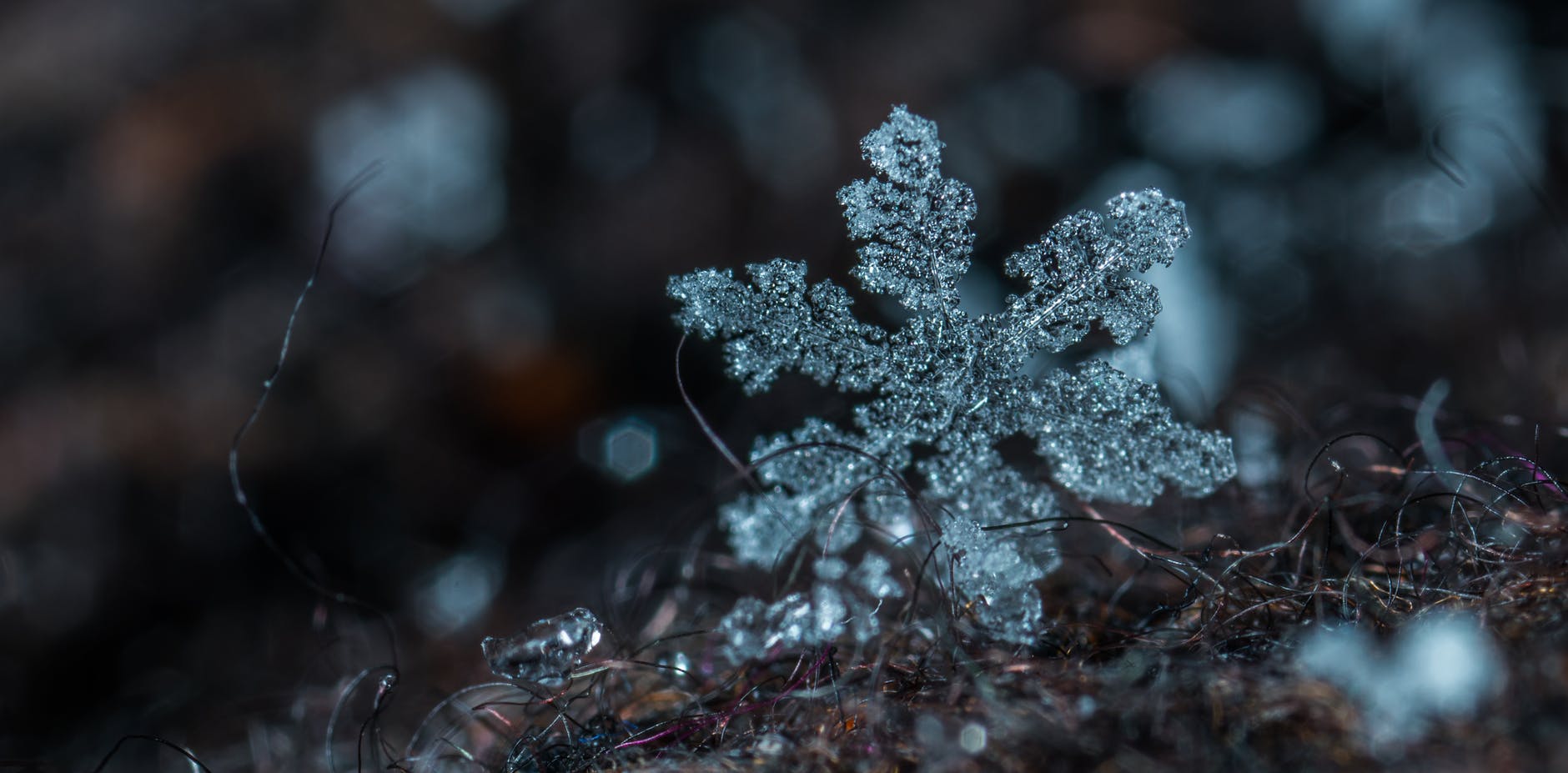
Maybe this is like the snowflake phenomenon, where every snowflake in the world is precisely unique in some mysterious way. Writing stories that emerge from that unknown place that resides somewhere inside of us tells us more about how we think about our world than we may be mindful of. The best part of this experiment was the realization that as I have developed a writing routine, the spark needed to begin doesn’t have to be particularly special or profound.
It feels as if there are an infinite number of stories in us that we just need to gently nudge to bring into the world.
Picture prompts, first sentence lines, a snippet about a bizarre circumstance, all of these types of writing prompts seems to propel us to create something that is individual only to ourselves. And it is a worthy exercise to pay close attention to how other writers respond to the same prompt. It seems that we all have stories that need to be told.
When our writing group uses a prompt for spontaneous generative work, I love hearing how each of us approaches the words on the page. It is a marvel to listen to how other writers using exactly the same prompt have such diverse results. I learn something new each and every time we do this. Storytelling satisfies both our curiosity and that need for knowledge that we all have about each other and how we see the world.
The beauty of a writing prompt is that provides just a tiny push forward to release our words out into the world. And anything that helps us kickstart the writing process can only be a good thing.
Curiosity sparks creativity and that, in turn, leads to a self-sustaining system: Creative questions lead to curiosity, and curious questions lead to creativity.
Daphne Gray-Grant
In order to flourish, writers need to embrace curiosity. For most of us, being curious was a constant companion during our childhood years. Asking the critical questions, why? or what if? sparks a kind of wondering that takes us down a path where the stories we tell take root from those naturally curious questions we ask of ourselves and everything in the world around us.
Learning about things we don’t have the answers for, shapes the story telling process. And creativity begets creativity. Writers often follow threads like novelty, complexity, conflict or surprise that help them weave a piece of art. And this process may serve to lead us towards that coveted place in our minds where we achieve a state of “flow.” That mental space where words fly from our fingers to the page faster than we can get them down.
But to remain in a curious state, we are required to suspend several things. We must release judgement, strong negative emotions, and above all, apathy. Stories take shape when we seek knowledge, a way of seeing people, things, and places as we never have before. Being curious encourages us to strive to put into language things that are unspeakable and that we may have been blocked from seeing in some way.
Asking the questions we have about the world around us can unlock the way we think just enough to catch those sparks of creativity that we look for to start our stories. And we can also use this process to understand our own unique stories. To uncover those inner aspects of our lives that we haven’t previously thought about could suddenly makes sense to us in a story format.
Indeed, taking a different approach to developing an understanding of what makes people tick, of why things unfold the way they do, may make our small part of the world feel slightly different. Story telling keeps us feeling alive so learning new ways to become more curious will help us to become attuned for those moments that ignite our creative impulses.
And if we develop an intentional practice of becoming curious in our lives, we will be able to cultivate this so it shines like a beacon in our work inspiring readers to become curious and care about our words. Why not? Happy writing!
There is something about just setting the pen to paper that lifts me and helps to focus my energy and thoughts
Susan Elaine Jenkins
With pen poised and in anticipation of all the amazing writing events that take place during the month of November, I feel like I am bubbling with ideas and good writing energy. Whether you are writing a novel or memoir in a month, a poem or a piece of flash fiction each day, there is no better opportunity than right now to kickstart a writing practice that might last through the long months of winter.
Although writing is a solitary practice, the community of writers in a multitude of genres who come together in November to encourage, cajole, and support one another provides the perfect backdrop to solidify a writing routine. It typically takes three weeks to develop and form a habit. So it doesn’t get any better than right now to join like minded writers from across the globe in this month long frenzy of sending your words out into the universe.
This is my second year signing up to participate in FlashNano! with Nancy Stohlman, who does a fabulous job of encouraging writers dabbling in flash fiction with amazing prompts, daily motivational emails, and providing a safe space for writers to connect and share their work. The creative sparks which radiate from this community infuse my daily forays into flash fiction.
And I know that when fatigue sets in in about two and half weeks, there will be a community of flash fiction writers to help with the final push to make it through to the end of this month. Regardless of the work I produce, I know that I am taking away so much more than thirty first drafts of short short stories. That is just the icing on the writing cake. What matters most is the felt sense of connection with story tellers from around the world.
Names are not important. It’s what lies inside of you that matters
Sarah J. Maas
Confronted by a blank white screen during this morning’s writing practice and finding myself equally as blank, I flipped through a notebook looking for ideas. Anything to get words out of my head and onto the page would suffice. I found an exercise that I thought looked interesting although its genesis uncertain but it seemed likely to be short so I decided to give it a try.
Here’s what it was: To start, use a web search to look at the origin and meaning of your name. Consider if your research fits with your sense of self, your identity, values and beliefs. Does it reveal context around the time of your birth? Would another name work better? If so, how would those around you react to this change.
I landed on the web-site, behindthename.com and placed my given name in the search bar. Intrigued, I scrolled through the results, taking in the origin of my name – Germanic noted to have a Spanish equivalency. Meaning words: flexible, soft, mild, beautiful. Then I moved into the coloured graphs that indicate the popularity of the name, the decades when it was used most often. Listings displayed were indicated by countries in the world where the name was used most frequently then tapering off as the name began to wane in popularity.
I could see that my name’s use was popular at one point in time and then fell off rather abruptly right around the time I was born. A tab with ratings on a myriad of characteristics showed me that my name is classic, wholesome. A comments section led me down a rabbit hole of a wide range of opinions about the name and people who like or dislike it. And finally, a tab for a section titled, namesakes, which contains a comprehensive listing of popular people and fictional characters in literature, movies, etc that share my name.
Interesting but reflecting on whether or not my name fits best with my sense of self and identity seems like a question best not asked. I can’t imagine not having the name I was given. And really the descriptors used on this web-site were generic rather like a syndicated horoscope in the daily newspaper. A person’s sense of self includes recognition of your name but there are so many complicated aspects of who we believe we are.
But curious about the meaning of names, I began looking up names of my family members and close friends. Some aspects of the meaning of names fit people in my life like a tailored suit and others seemed more generic like a one size fits all type of thing. I’m not certain there was anyone who should have a different name other than the one they already possess.
But learning more about the context of names in addition to the origins and meaning provides a window into determining what to name characters when writing fiction. Thinking about amplifying aspects of the person you are writing about can be a complex and nebulous effort. Landing on a tool to narrow and sharpen your lens through a focus on the origins and meaning of name could be helpful.
And this simplistic exercise did what I initially wanted it to do. It provided a quick kickstart to this morning’s writing practice and a possible strategy for naming fictional characters. As for the rest of it, my sense of self remains intact and I can’t imagine having any other name than what I was given at birth. But the joy in writing is the opportunity to play with alternate realities and to feel those creative sparks!
There’s something to be said for the quiet state of dormancy where little apparently happens
Bonnie Tsui
Creativity as a process is often a concept we take for granted. Either we have it or we don’t. And for those of us living a creative life as writers, artists, musicians, performers, and so on, those moments in our lives where we struggle to produce something, anything actually, become those times when we experience pain in a visceral way.
But just as in nature, there are cycles to creativity. Those times when we are not able to accomplish what we believe that we should, signal to us that it is likely time to step back and celebrate a change in focus to one of restoration and rejuvenation. Dr. Shelley Carson at Harvard University suggests that the creative brain is comprised of seven differing states. Learning more about how our creative process needs to unfold may be helpful at leading us to become more, rather than less productive, even if it seems that we are not doing anything.
Taking time to rest, to lay fallow, or to recognize when our brains are moving into what Dr. Carson has called an “absorb state” can be powerful. And a bit of a relief.
Knowing that it is okay to be quiet with our thoughts, to leave our projects alone for a period of time, to pay attention to the world around us simply taking it in can be a freeing experience. And by honouring the way our neurological needs should be met, the creative payoff in the long run is a welcome life lesson.
For me, there is something about the time when the leaves turn yellow and our garden beds are put to rest that I now recognize tells me that I need a bit of a breather. Long walks, free writing, playing with photography all combine into what I hope is a type of creative “vacation”. Rather than give in to anxiety about what I am or am not creating right now, this year I am hoping to nourish and prepare my brain for the writing work I hope to accomplish during the winter months.






 Visions of Transition