Itching for change

Photo by Pixabay on Pexels.com

Nature is never static. It is always changing. Everything is in a constant state of flux. Nothing endures. Everything is either in the process of either coming into being or expiring

Kilroy J. Oldster

Faced with the tedium of being isolated and restricted from our normal activities for the past 15 months, many of us have used this time to reflect on our lives and ask ourselves some key questions. Am I really doing what I want to be doing. How I spend my time – is it in a way that’s fulfilling or has purpose. Perhaps the increased need to search for meaning has been pushed by an awareness of the fragility of life forced upon us by the pandemic.

Often when we are stuck in one place especially by circumstances beyond our control, we gravitate to daydreams of change in many aspects of our lives. Humans crave novelty, we seek dopamine hits from new experiences, foods, relationships, places, etc. We seem to have a craving for action even when it may not be in our best interests to make massive or even minor life changes. Researchers are beginning to track the number of changes in jobs, places people live, and relationships that are escalating at an unprecedented rate due to the pandemic.

Feeling stuck often prompts us to make rash decisions when it might be better to simply stay the course and ride out the emotional wave that accompanies this unusual time. Changing situations doesn’t miraculously improve our lives and if we don’t spend time planning and reflecting then rushing towards something not well thought out, things may get worse not better. Common advice is usually to stop to consider whether you are running towards something or running away from it.

As large numbers of people move from their homes, change jobs, leave relationships, during these tumultuous times, these ripples will likely be felt throughout the globe. This pandemic as the ultimate disruptor has upended many lives through job loss, loss of loved ones, and as major life plans became disturbed.

But creating these changes when they have not been forced upon you without careful thought or consideration can have similar results.

Although I have been struggling to scratch the itch for change, it seems prudent to spend a bit more time in reflection and find some safe alternatives to bring what might be missing into my life. It is indeed a powerful force that requires mindful attention. It is helpful to recognize the space where these feelings may emerge from. And the old adage to look before you leap still has a place in our lives.

Stay healthy and safe!

Things are heating up

Photo by Sippakorn Yamkasikorn on Pexels.com

I want you to act like your house is on fire, because it is.

Greta Thunberg

When I first saw this young woman leading climate change protest events, I was moved by the many youth activists showing leadership on environmental sustainability from around the world. Once the pandemic began, their movement was transformed and not as vocal or visible. My hope is that youth are able to rally and come back stronger than before. We need their voices and we also need to begin to take action with meaningful impact.

As we move out of isolation and lockdowns into our new “normal”, it has been a harsh lesson to realize that we haven’t dialled down the impact of climate change while we have been spending time at home. Weather events in Western Canada have been serving as a harsh reminder that we have yet to make a dent in addressing our responsibility to be good stewards of our natural environment. As I was writing this blog post, our power went out and it was frightening how quickly the heat moves into a home when there is no way to circulate air.

This unprecedented heat, termed a “dome” has blanketed much of this vast country. As the risk for forest fires becomes dangerously extreme and the heat wave extends, more people are experiencing heat exhaustion, heat stroke and even sudden death. With the climate crisis knocking at our front doors, the need to respond seems more urgent than ever.

Conditions are ripe for a summer of fire and extreme heat while we attempt to resume our normal lives. Looking out for others around us who are vulnerable or living on their own, needs to become a community priority. Indeed, keeping ourselves and those we care about safe during these unbelievable temperatures will take all of our energy and fortitude. Forest fires, drought on our farmlands, flooding and severe weather events have become a stronger aspect of our summer seasons.

We really do need to find ways to collectively take action to effect change in our climate. Before it gets worse. I hope the young people are able to gather together again and mobilize to bring back their activist leadership. It is desperately needed and definitely missed. Let’s hope it is safe for them to do so and follow their lead.

Stay safe, healthy, keep cool, and commit to as many environmentally sustainable actions as you can.

A creative kind of disappointment

Photo by Yaroslav Shuraev on Pexels.com

Disappointment is simply a dream that doesn’t want to become a reality

Richard Wilkin

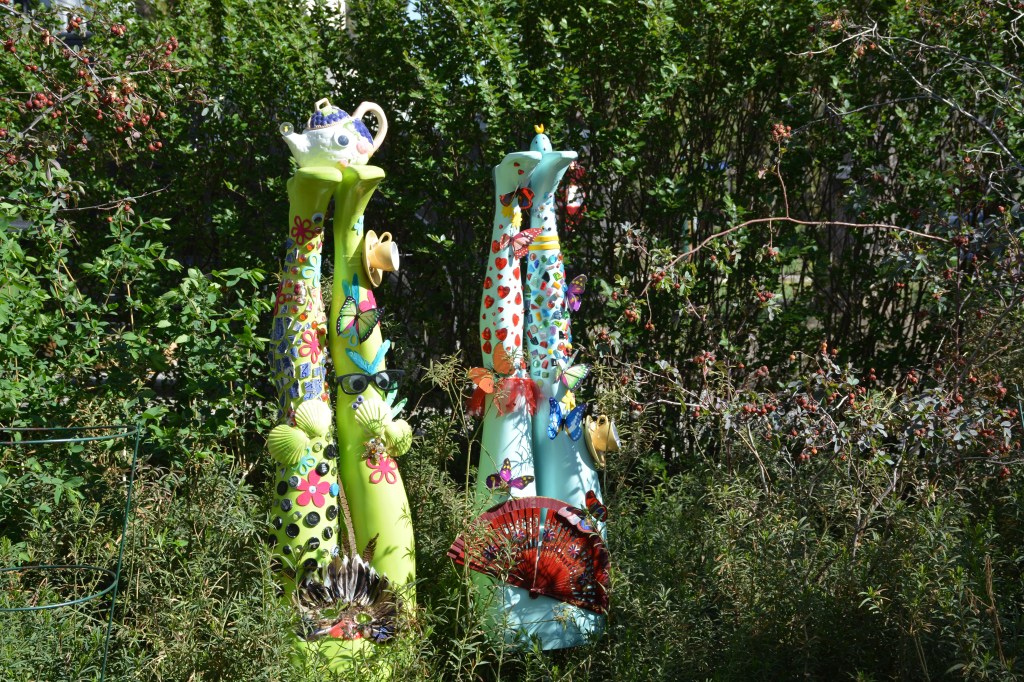
Have you ever created something only to discover what you had envisioned doesn’t really exist? I spent an hour yesterday morning walking around parks near my home toting my camera. Inspired by some of the intriguing yard art in our neighbourhood, I was beginning to think about creativity as a process. Where it comes from, where it resides, and where it goes when it disappears. Poised with my camera, I shot dandelions in the moment as a sudden burst of wind caused white whispers of seed to scatter into the air. Magnificent, certainly, perhaps even a photograph worthy of posting somewhere.

As I continued to walk, I shot two red winged blackbirds who were either fighting over a nesting spot or defending one that already existed. Clear, sharp in focus, images of birds whose red stripes were vivid showcased in the camera lens. More than satisfied, I continued walking along a creek bank. Pelicans feeding on fish, and performing some morning bathing abulations that I have never witnessed before. They are typically difficult birds to photograph because as soon as they sense your presence they turn their backs towards you. So thinking I had captured at least one shot of these antics got my adrenaline moving.

On the way back, I discovered a piece of yard art that was fun, whimsical and full of hidden surprises. An antique screen door used as the backdrop for an antique hand pump fashioned into a water fountain. Lily of the valley graced the base of the display and in amongst the tiny white flowers were three miniature gnomes in various poses. I didn’t even notice them at first but felt a shimmer of delight in this discovery quickly anticipating how wondrous these hidden glimpses would be in a photo.

Later in the afternoon, I spied a tiny wasp nest attached on the underside of a ladder propped against our backyard fence. It was petite and it took some time to process and register what it was. But before I would remove the nest, I ran to get my camera so I could photograph this tiny little wonder. Popping on a different lens for macro shots, I quickly began snapping pictures from different angles. Paper thin, fragile in shades of grey, white, with swirls of black lines, the subtle texture of the nest quite stunning. A wasp emerged as I was taking a picture which was really neat but I decided there was no point pushing my luck and was grateful I had captured many images.

So last evening I took out my camera card to upload the photos from my creative adventures throughout the day. When I opened the compartment to retrieve my camera card, it was obvious that the card had not been firmly placed in its slot. Feeling a sickening, sinking sensation just below my heart center, I was fairly certain there would be nothing on it.

Ignoring the truth of what was happening, I placed the card in the slot on my computer. Clicking to import new photos, I was confronted with the fact that there really were no images on that card. Absolutely none at all. All of those amazing creative fragments which had danced in my head throughout the day, gone. That swing of energy that carried me through the day had only culminated in a sense of disappointment which lingered for longer than it should have.

Reflecting on this now has made me realize that disappointment should not negate the power of creative bursts of effort. There is much in life that disappoints us and it seems best to release those feelings rather than to cling to emotions that disturb and distort. Creative practice is just that. Practice. In hindsight, the magic of all those moments behind the camera lens continue to inspire. Not to mention learning a rather tough lesson about camera cards!

When we adjust and adapt our expectations, when we summon flexibility as needed, our disappointment disappears!

Stay healthy and safe!

Getting back to “normal” like three legged race

Photo by Anna Shvets on Pexels.com

I think that the general feeling is that the pandemic has passed, that the pandemic is ending, the pandemic is over. That is absolutely not clear.

Dr. J. Froh

“Re-opening plans” “Vaccine Lotteries” “Post Pandemic Guidelines” “Public Health Urges Caution”

Many of our current media headlines contain some facsimile of the above. As global efforts have ramped up to vaccinate many people, communities across the globe are grabbling with what a post pandemic world really means. Individuals are left to interpret real life scientific data as it is being collected and assess their own levels of risk as public health guidelines are loosened. Will there be a fourth wave? Yes. No. Maybe, we don’t know, yet. In limbo or in purgatory? Yikes, how are we supposed to navigate all of this!

It all seems about as confusing as it was in the early days when this pandemic started. The only thing in my experience that I can compare it to is a three legged race. One of those old fashioned picnic games where two people are partnered up and then have one leg tied to each other so in essence they have “three legs”. Then they are expected to race a short distance together to a finish line. Such an antic would be hilarious, people lurching about, falling (gently of course) but it usually took the length of the race to figure out how to work well enough with your partner to begin to run in tandem. This whole re-opening concept strikes me as the same sort of thing.

Restaurants are now open with some restrictions. I must admit I still am not anxious to rush off and dine out. Fitness classes and outdoor recreation activities have resumed. Not quite ready to resume in person yoga but I am tired of doing it over Zoom. Crowds in shopping centres are popping up once again. The first time I noticed how much larger crowds have become I felt unnerved. Early hour shopping opportunities are ending.

Masks are still required in order to enter most indoor businesses and services but the day will soon be coming where they will not be required. In some parts of North America, mask use has created conditions for dangerous occurrences. People have melted down and become physically violent and there have been reports of use of deadly force. All over whether or not someone should wear a mask. Good grief!

What to do if you are vaccinated but wary and anxious about all of this change? What if you haven’t been able yet to get a vaccine? This seems like some kind of reverse deja vu back from when the pandemic began. As case counts come down, I find myself still waiting for the daily news where I get my sense of virus activity in my city, my community, and within groups of people that I know. But I know that I need to start to take risks, begin the process of learning what the new “normal” is and how to step through this next aspect of our lives.

It seems more important than ever to remember to keep things in a balanced perspective. To make your own choices and not condemn others for their chosen level of risk. If someone you know or care about gets the virus, be compassionate! One day it may feel okay but the next day it might not. Learn to accept what is and go with the flow. Be sensible, stay within your own comfort zone. Expect all of this to fluctuate, we are in yet another time of transition. Remember to be okay with what works for you and others in your life whom you care about.

Stay healthy and safe!

Time for Reflection in Canada

Photo L Meyer

3. Reconciliation is a process of healing relationships that requires public truth sharing, apology, and commemoration that acknowledge and redress past harms.

6. All Canadians, as Treaty peoples, share responsibility for establishing and maintaining mutually respectful relationships.

TRC Final Report, Volume 6

Heartbreaking headlines. The discovery of a mass burial site of 215 children at the former Kamloops Indian Residential School sent shockwaves across Canada last week. People placed tiny shoes on the steps of many provincial legislative buildings, gathered outside of churches to express profound sadness and grief. It seems surreal that so many children were not afforded the respect and decency of ceremonial burial with their family and communities.

And how did they die in the first place? Why were their families allowed to believe they had gone missing? Why were records never kept or shared? So many questions that many indigenous people have been seeking answers to for decades. Their voices ignored, dismissed, discounted up until now so at least they’re being heard.

Since then crisis lines to support residential school survivors and their families have been inundated. Traditional ceremonies held across this land and politicians from all walks have expressed profound sadness coupled with shame. Calls upon the Vatican for the Pope to issue a formal apology on behalf of the Roman Catholic Church, which ran many residential schools, are growing. Louder.

During the hearings held by the Truth and Reconciliation, many survivors shared stories about children who died, went missing, and whose families never learned what had happened to their children. Children who were forcibly taken from them in the first place. It should be unimaginable that these tragedies occurred but we should be asking why there has never been an impetus to investigate what really happened to so many missing children.

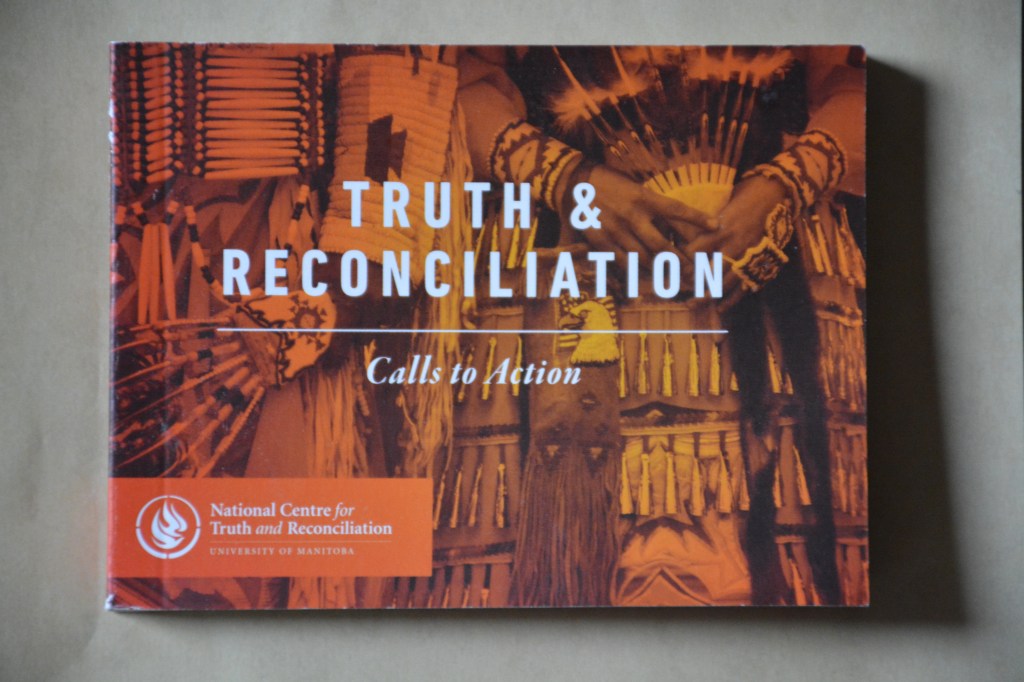
This discovery further reveals large segments of our society who complain that this was all in the past and “they” should just get over it. That there are many who never read the Truth and Reconciliation calls to action. How is it possible that all of this work, the pain of survivor’s disclosure, the thoughtful 94 calls to actions have been left to collect dust. Again. This just seems to demonstrate a collective callousness. As Canadians we owe it to the children and to ourselves to reflect and move forward from this in a good way.

My heart hurts thinking about these children taken away from their families causing a pain best left unimagined only to be buried in unknown mass graves. We can do better, we can be better.

Take a moment to help us honour these children through silence, reflection, or prayer.

Paying attention can help grow a writer’s craft

Photo by L Meyer

If you want to change your life, change what you pay attention to. We give things meaning by paying attention to them and so moving your attention from one thing to another can absolutely change your future

Jessica Crispin

For the most part, I haven’t spend a great deal of time considering what types of things I am paying attention to in my day to day life. If I am specifically trying a mindfulness technique or attempting to meditate, I am able to acknowledge the types of thought processes I engage in when I am not doing anything. More typically, I observe what I didn’t pay attention to or have some free floating awareness of the things I am attending to. Especially those negative thoughts or emotions that I may be hanging onto without conscious realization.

But when I am writing, I haven’t spent time thinking about the specifics of where my focus is or isn’t. This week, I embarked on an intensive writing course and part of the work we will be doing is not merely generative writing exercises but learning through a process of paying careful attention to the writings of select authors. And then paying attention to very specific details of my own writing process.

It’s easy to gloss over words, phrases and even entire paragraphs when reading a story and at times the same may be said for when you are writing one. Learning to focus one’s attention to nuance is proving to be a valuable skill. Eye-opening in more ways than one. The first hurdle I had to make was to push through that small mountain of insecurity that one experiences when sharing your writing. This can seem more insurmountable when you are working with a cadre of writers more experienced and who have published more than I have.

But by being asked to pay keen attention to what they are focused upon as readers has brought me new awareness and understanding. Suddenly instead of shying away from constructive criticism, I am craving these gems that fellow writers are sharing. I am coming to value where my story breaks down, or I suddenly inserted a new POV where it shouldn’t be. Hearing what others might do to stimulate character evolution in something I have written, or thinking about where an inciting incident should be placed from different vantage points has served to teach me more than I set out to learn.

However, there was one clear takeaway from this experience that quickly became evident.

If we spend too much time worrying about how others are perceiving what we have created, we will miss an incredible journey of learning about what others have to share with us. These growth opportunities may not come often but when they appear you must seize the moment. Take risks. Seek out helpful criticism. Learn the subtle art of accepting the wisdom of others who have much to teach you about how to pay attention to your own work. And the lessons from this experience have shed light that could likely shine on many aspects of life. Not just writing.

Stay healthy and safe!

The Spark File: a writer’s tool that worked

Photo by Pixabay on Pexels.com

The most interesting part of the experience is the feeling of reading through your own words describing new ideas as they are occurring to you for the first time. In a funny way, it feels like you are brainstorming with past versions of yourself

Stephen Johnson

Have you ever read about a technique that you believe may help you with your creative process or strengthen your understanding of your craft? Many of us do this to further our development in whatever artistic endeavour we are passionate about. If your experience is similar to mine, you may find that you become momentarily excited about an idea but never actually follow through with the practical application of these strategies.

At times, I have wondered if this may be just a sophisticated form of procrastination.

But what happens when you do follow through and commit to trying an idea for a period of time. And then discover that it makes the mark and has real impact.

As a writer, I had been jotting down ideas in random notebooks, my daily journal and sometimes in a notes file on my phone. This has always seemed disjointed and I rarely, if ever have taken much time to review those ideas with more than passing interest. Recently, I came across an article about something called a Spark file. More than casually curious, I then took the time to view a Ted talk by Stephen Johnson, creator of this strategy that he calls the Spark File.

Simplistic in nature, a spark file is simply a chronological record of ideas, thoughts, or creative hunches which excite in some way. Intended for those times when it occurs to you that maybe you should write this down, or research to learn more, or…but never do and those marvellous ideas just float away into some place that must be creative purgatory.

There are likely numerous tools one could use to collect the ideas that in the moment feel important and meaningful but you may not have to time to really sit down and develop them. I chose to use a Google doc because it is easy to use on all of my devices. Working in this way has produced a lengthy document that is really a series of snippets of writing that may be “hunches” or ideas not fully formed but otherwise would be easily forgotten about.

This document contains possible titles for stories I have written, ideas about things to research, edits to consider for pieces already in progress, character sketches, plot devices, questions about point of view, etc. Realistically it serves as a quick snapshot inside my head that tells me a little bit about my writing process, the pieces that I am working on or the dreams I have that I visualize writing about in the future.

The key to making this work is to periodically take the time to review all of what has been entered in your Spark file, take a step back and then begin the search to make associations, find patterns and relationships between the random pieces of writing you have collected over time. I was surprised by the way this actually worked for me. I gleaned enough about my writing process to finish edits on pieces that had stalled and were suspended in limbo.

I suppose the thing I was most surprised by was the manner in which this simplistic tool provided some insight into some aspects of my work as well as the fluid and organic nature of creativity. It seems like more than happenstance that using a loosely structured way to capture some of my thoughts and ideas actually paid off with some results that I am pleased with.

Our creative brains are always available to us and if we can structure a way to capture those ideas that captivate us and contribute in a meaningful way to our creativity, it serves as a roadmap to help prevent getting lost along this journey. And it is always nice when something we read about, and then invest time and effort in, has a real world practical application.

Stay healthy and safe!

“Creating” room in our lives for play

Photo L Meyer

Openness and the ability to access exploratory play are big parts of creativity, but as we get older we become alienated from these abilities. We were all born with this built in imagination. For creativity to work we need to embrace unpredictability. We need to step outside the rules.

David Usher

In this past year our neighbourhood playground has been closed off with yellow warning tape, reopened fully, and now has a barrage of signs with Covid warnings and public health guidelines. Watching small children play with abandon is a fascinating albeit rare event these days. But the manner in which a child creates something, engages in play of any kind is a glimpse into a process that we could all stand to incorporate more often into our own lives.

Spending time observing children in a nearby playground made me keenly aware of how little time adults spend in play. I watched tiny hands piling a mound of sand switching to suddenly run off to gather mounds of sticks then darting back to position them in just a certain way and finally finished with a smooth stone placed on top. To my adult eye this appeared to be a haphazard way of “playing” in the sandbox with the result seeming to be just a pile of messy debris. As quickly as that thought occurred to me, the child decides it is finished and runs off to find her mother to show off her creation. Her exuberance over her creation and excitement to share it with her mother was compelling.

When did we lose our ability to find joy in the most obscure of our creative ventures? If we are makers or creators, we may impose a set of expectations upon ourselves that are not only unrealistic but self-defeating. Do we need to expect that everything we set out to do will find its way into the public domain? Of course not, yet that is precisely what happens for many artists. Our bursts of creative passion are often tempered by rumination, negative self talk that remind us that we are not good enough, creative enough, etc.

The pressure we place upon ourselves before we even sit down to write, or to paint often leaves us in a state of inertia where we erroneously believe it is safer to do nothing than to resist all of this self imposed negativity and persevere. Imagine for a moment if children approached their daily play activities with inappropriate expectations and terror that their sand creation would never be published or purchased. Sounds inane, right? Because it is. And that goes for adults as well.

Instead of defining what we will do with our art before we even create it, what if we just make space in our lives for play, to just create, and become just okay with that. If something emerges that we could send into the world, then perhaps we will do that. But otherwise, it is the process of creativity in and of itself that should be what is of importance. As humans we can be creative in every aspect of our lives. So if we can’t write, or shoot a photograph, or collage or paint a masterpiece, perhaps we are cooking or gardening or bringing pieces of creativity to our work lives.

Relearning to create like a child is a gift that we all deserve to give to ourselves. Although it may seem that taking precious time for exploratory play is frivolous given our daily responsibilities and obligations, we will lose out on those creative leaps that occur when we give ourselves permission to let our imaginative powers loose. Finding those sparks that light us up can be possible when we relax our perfectionistic expectations and learn to lean into the moment. Letting your play flags fly may take us further than we think. And no matter the result, it can’t hurt us to play a bit more often.

Stay healthy and safe!

Be bold…do everything you can to support others right now

Photo by Samson Katt on Pexels.com

I believe we begin every day anew with an empty cup. It’s up to us to fill it with beliefs, thoughts and action that inspire and honour the journey we all share.

Polly Simpkins, The Cup of Karma Project

Countries in various parts of the globe made hard choices a number of months ago to do everything in their power to stop the coronavirus in its tracks and for the most part they have been successful. These choices helped them achieve better outcomes from both a health and an economic perspective. Recently, several countries have done a remarkable job with vaccines leading the way for a path forward for all of us to emulate.

Some countries though are in a constant struggle with how to implement public health measures that will not be met with resistance, protest and outright animosity. The majority of people, albeit, tired of restrictions and isolation follow the rules in order to protect themselves, those they care about and others in their communities. But it has become an uphill battle with people becoming more entrenched in their positions on whether or not they believe vaccines are safe, whether or not masks save lives, and those who claim that Covid 19 is not real continuing to spin their fantastical tales.

Imagine a world where we all agree we are in the same boat together, pulling on oars together in synchronous fashion. Our ship would glide through these turbulent waters as we worked hard not only for ourselves but for one another. Instead at times, we seem to be spinning in opposite directions with some of us pushing, others pulling, with the result being that we are going around and around.

This is a global problem and we need to do more of the good and decent things that we do best and less and less of those that are harmful to ourselves and those around us. Until we decide to put all of our best efforts into ending this pandemic, it won’t end. It will retreat briefly, only to flare up again and again. It is up to each and everyone of us to lead by example and encourage and support others if they are struggling.

Letting go of misdirected anger, animosity, and harmful rhetoric would be a wonderful place to start. Putting faith in our collective efforts, respectfully agreeing to disagree, and thinking about what we could each do that would make an indelible impact upon our future. Working together to resolve the pandemic would give us the encouragement needed to take on the world’s climate crisis and the myriad of other critical issues that require our urgent attention.

Every individual can make a difference. Collectively, we just need to believe that we really want to.

Stay healthy and safe!

Learning to accept the roller coaster of emotions

Photo by L Meyer

Emotions are celebrated and repressed, analyzed and medicated, adored and ignored – but rarely, if ever, are they honoured

Karla McLaren

Being successful in the management of one’s feelings is an ongoing process. Few of us ever reach that vaulted and imaginary finish line, where we have mastered times of inner emotional turbulence. Most of us endure times where we might struggle in managing some of the more difficult emotions that humans experience. It is challenging during these ongoing stressful times to not periodically fall into a dark, dangerous pit of negativity or a false, shrill sense of pseudo optimism often referred to as “toxic positivity”.

Having become more isolated from face to face interpersonal interactions during the “third” wave, it can seem overwhelming to sort out the day to day emotional roller coaster ride that at times seems as if we are hanging on by the tips of our fingers. When we do see people important in our lives, it is all too easy to gloss over or avoid expressing our authentic but unpleasant emotions.

For a period of time, many people were describing the “silver linings” that they were finding during the pandemic. Some of these were profound but many so called silver linings could only be described as inane. But the reality for most of us seems to have become a suspension in time. Where we might be simply languishing. Waiting without an understanding of what might happen next. Finding the future path forward muddied and unclear, along with a plethora of feelings – both negative and positive ones. Some okay and some not so okay.

But they are just feelings. Fleeting moments of emotion that we can learn to manage. The urge we might have when confronted by negative feelings is to outrun them, subdue them, numb them, and this is something that many of us experience but struggle to acknowledge. Fear of pushing others away when we need them the most leads us at times, to downplay those moments when we are experiencing negative feelings.

Humans struggle to listen to one another at the best of times. During the worst of times, this becomes a critical skill to support those we love and care about. Creating opportunities for the expression of emotions regardless of what they are, is a kindness that we could all use more of. Easing the hardship of times where emotional expression is a struggle for someone may be an unexpected gift.

Finding our way forward to accept that emotions are fluid, both positive and negative, and that we all share them as a part of our human experience can only be a good thing. Having a world full of people who will listen to what you need too share, is an even better thing.

Stay healthy and safe!